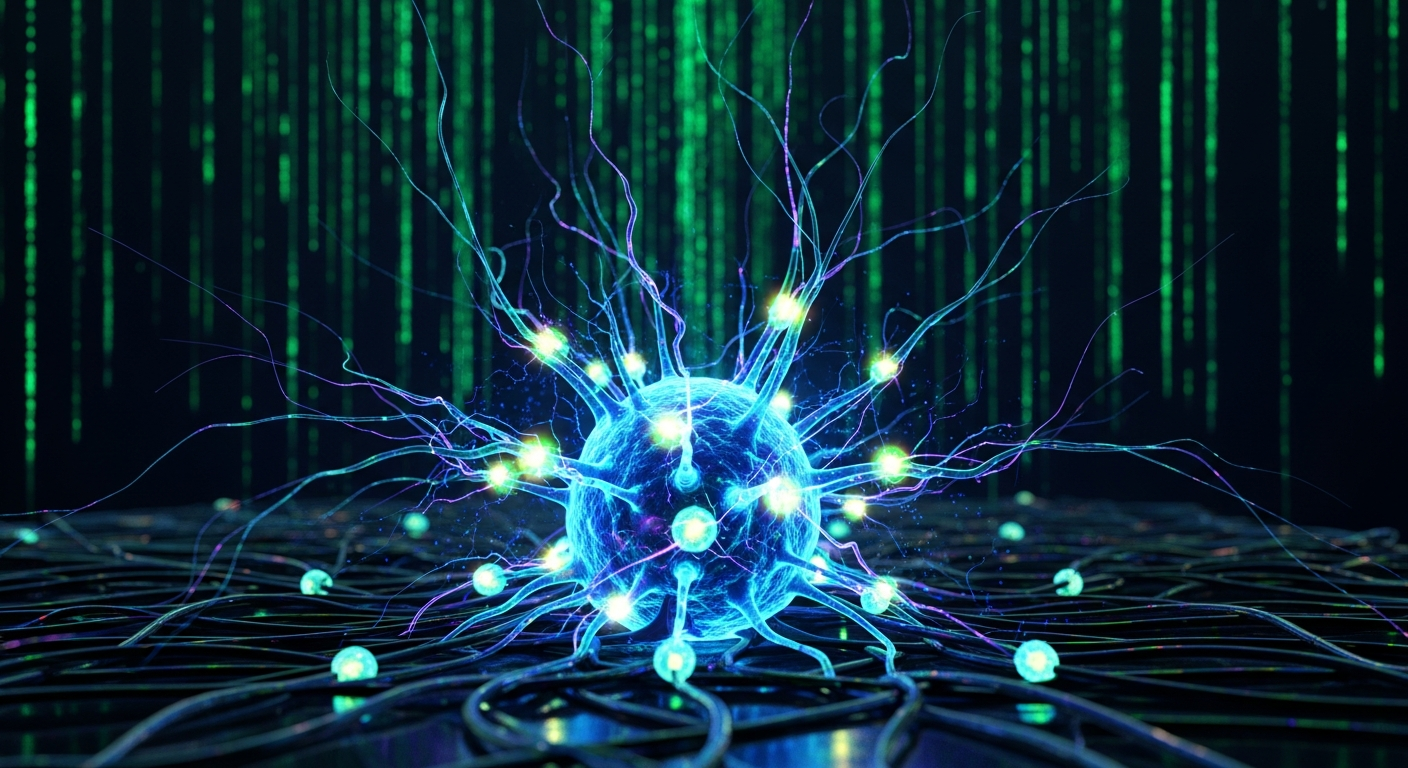
"What is real? How do you define real?" Morpheus asked that question in 1999 and the audience assumed he was talking philosophy. He was talking about compute architecture.
Here's what most people don't know: the original Matrix screenplay had humans serving as biological computers — not batteries. The Wachowskis' core concept was right. Studio executives pushed back. "Biological computers" was too abstract for a summer blockbuster, too technical for a poster. They changed it to batteries. The mechanism got dumbed down so audiences could follow it in 1999.
Cortical Labs is vindicating the original draft.
The most powerful information processing substrate in the known universe isn't silicon. It's neurons. The Wachowskis had the dystopian framing wrong, and the studio had the mechanism wrong. You don't need to enslave humanity to tap biology as a compute layer. You just need a petri dish, a high-density electrode array, and about $300 a week.
That's the Cortical Labs pitch. And it's not science fiction anymore.
Wake Up, Neo
In 2022, a team at Cortical Labs grew 800,000 human neurons on a chip and taught them to play Pong. Not simulated neurons. Not a metaphor. Biological cells receiving electrical signals, modifying their firing patterns in real time, learning to return a virtual ball — in about five minutes.
The paper ran in Neuron, one of the most rigorous peer-reviewed journals in biology. The result: a biological system that outperformed a standard deep reinforcement learning model trained on the same task, using a fraction of the energy, in a fraction of the time.
The experiment was called DishBrain. The name sounds like a prank. The science doesn't.
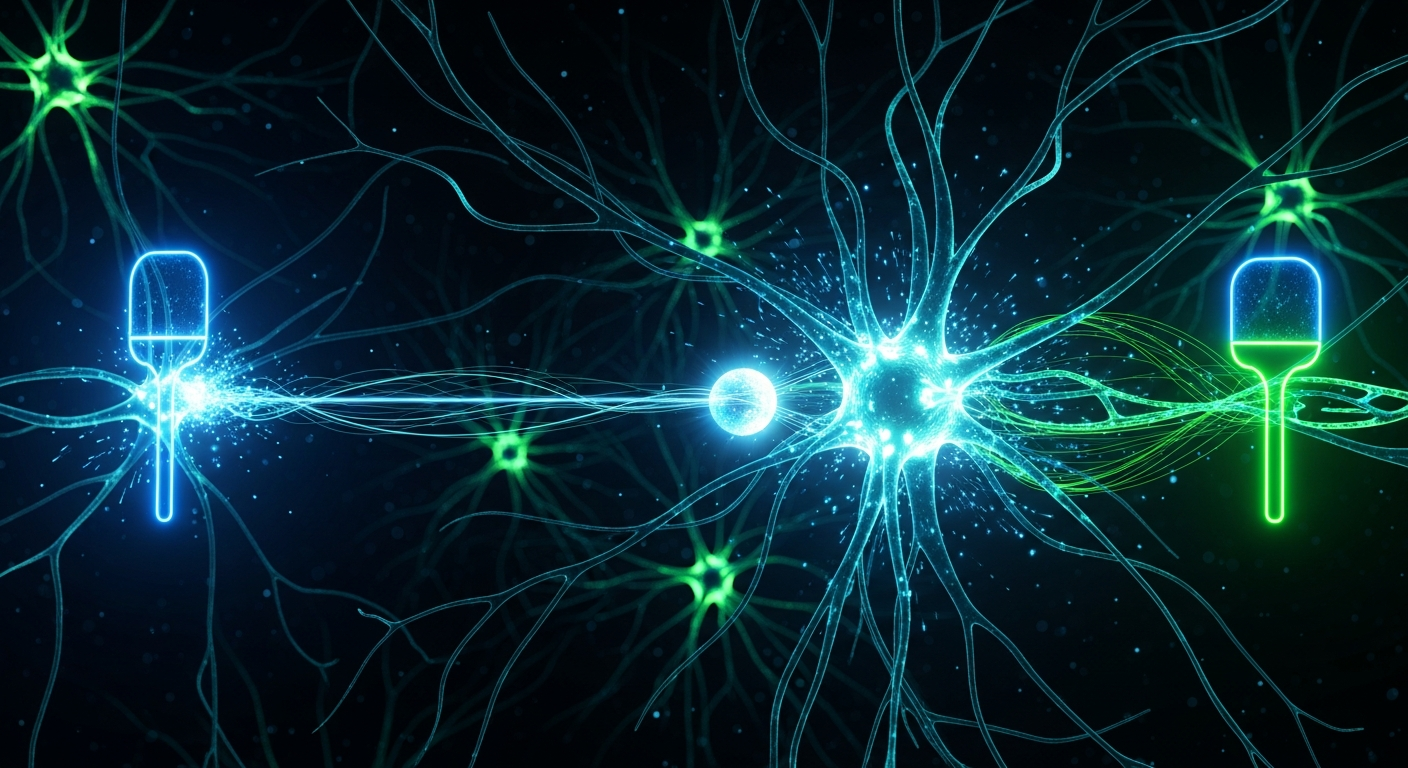
Here's the mechanism, because "neurons playing Pong" gets mischaracterized constantly. The cells weren't thinking about Pong. They were doing what neurons do: minimizing signal uncertainty. The system sent electrical pulses encoding the ball's position. When the paddle succeeded, the feedback was structured. When it missed, the feedback was chaotic. The neurons reorganized their firing patterns to maximize predictable input — the same mechanism underlying memory, learning, and every thought you've had today.
They didn't learn through gradient descent. They learned through electrophysiology. And they were faster.
There Is No Spoon
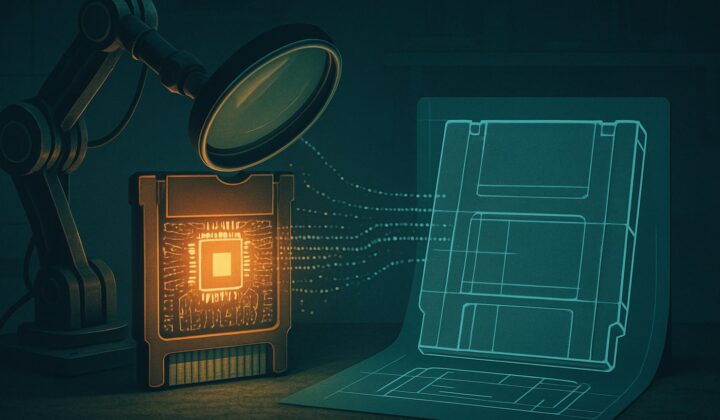
In March 2026 a solo developer integrated a CL1 — Cortical Labs' wetware computing platform — into a language model pipeline. It took a week. The neurons' electrical activity influenced the model's outputs. Not as a gimmick. As a working component.
That's the proof of concept that matters most, because it wasn't a lab demo. It was a developer building something on a Monday.
Almost all AI infrastructure assumes silicon is the substrate, transformers are the architecture, and compute budget is the constraint. Cortical Labs is here to tell you there is no spoon. The CL1 houses around 200,000 living human neurons cultured on a high-density multi-electrode array, connected to a standard compute stack. You can buy the hardware for $35,000 or rent cloud access for $300 a week. Cortical Labs shipped over 115 units in 2025.
FinalSpark, a Swiss competitor, runs the Neuroplatform as a cloud service over standard APIs. Two companies at commercial scale. That's a market, not a lab experiment.
Wetware-as-a-Service is live.
The Energy Math Nobody Wants to Talk About
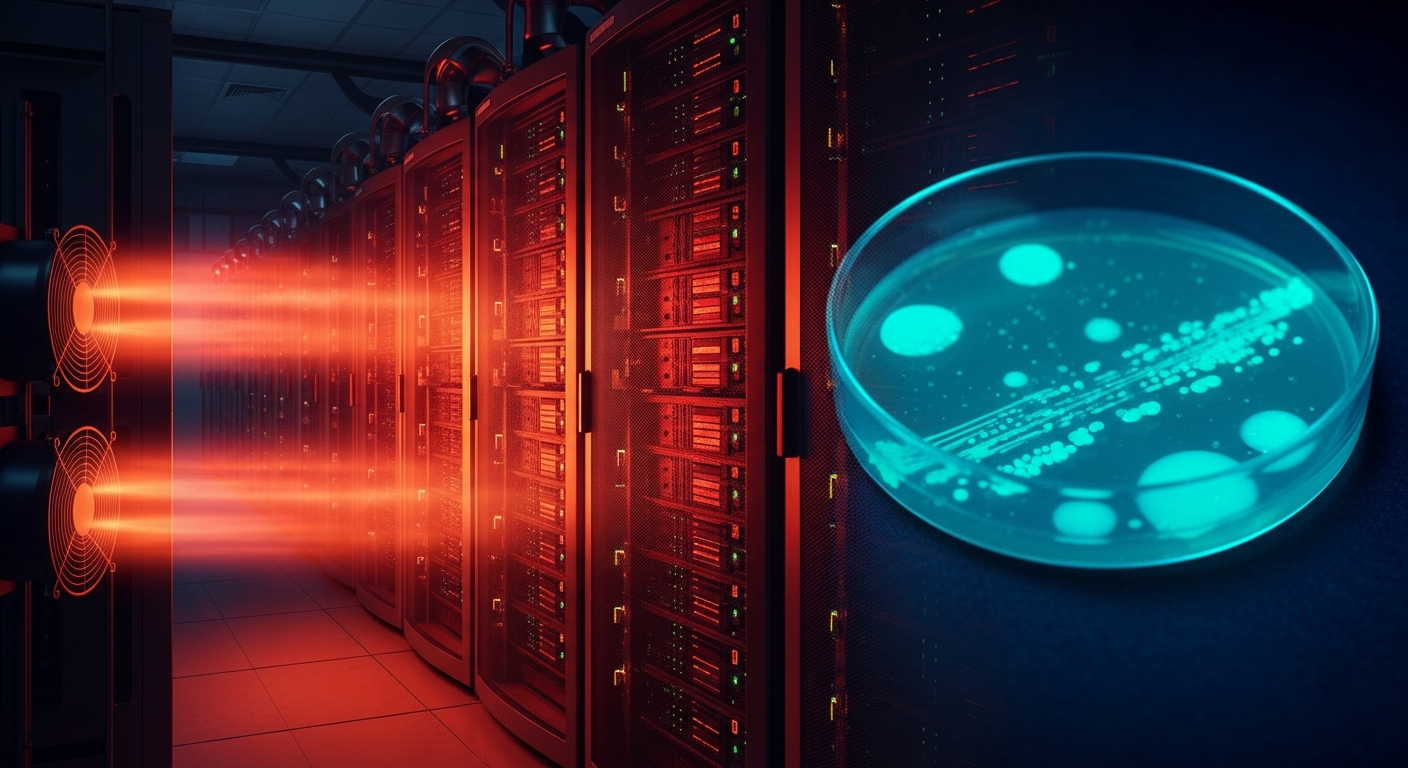
The human brain runs on approximately 20 watts. The same as a dim incandescent bulb. A modern AI supercomputer — the kind training the frontier models that get announced every few months — consumes around 29 megawatts.
That's a factor of 1.45 million.
The AI industry has been trying to close this gap with better chip architecture, more efficient attention mechanisms, quantization, and sparsity tricks. None of it touches the fundamental inefficiency: silicon runs hot, requires extreme manufacturing tolerances, and doesn't adapt at the hardware level. Every learning cycle happens in software, on top of static transistors that don't change.
Neurons rewire themselves. They strengthen connections that fire together, prune the ones that don't, and do it at room temperature powered by glucose. The learning is in the hardware, not layered on top of it.
There's a second gap: catastrophic forgetting. Retrain a silicon model on a new task and it forgets the old one. Nobody's solved it. Biological systems don't have the same problem — the neural architecture that learned Pong didn't lose existing capabilities when context shifted.
These aren't engineering problems. They're physics. And no amount of clever architecture around silicon closes them.

The Oracle Speaks: Follow the Money
In April 2023, Cortical Labs raised $10 million. The lead investor was Horizons Ventures, the fund run by Li Ka-shing — one of the most consequential technology investors of the last four decades. Among the co-investors: In-Q-Tel, the independent venture arm of the U.S. intelligence community.
In-Q-Tel is not the CIA. It's a non-profit that invests in technologies before the market sees them. They backed Palantir in 2004. They invested in Keyhole — which became Google Earth — in 2003. They're not infallible, but they have a documented track record of showing up early on things that compound into infrastructure.
When the Oracle tells you something matters, write it down.
The interest here is straightforward: intelligence workloads like signals analysis, satellite imagery pattern recognition, and anomaly detection on sensor arrays are exactly the kind of adaptive, high-volume processing where biology's energy efficiency and plasticity advantages are largest. Funding a platform that can run those workloads at a fraction of current energy cost, before anyone else does, is not a mystery. It's strategy. It's also validation that the underlying architecture is real enough to fund at an institutional level before it has an obvious market.
The Personalized Medicine Play: You Are the Compute
The near-term commercial application isn't general-purpose AI. It's drug screening.
Take neurons derived from a specific patient's cells — induced pluripotent stem cells reprogrammed from a skin biopsy — culture them on the array, and run candidate drug compounds past them. The biological response you measure isn't generic. It's from cells with that patient's exact genetic profile. Cortical Labs is currently shipping platforms for lung cancer drug screening, gastrointestinal tumor modeling, and Huntington's disease research.
The longer-term play is the one that sounds like the Matrix: the same substrate doing the drug screening eventually becomes a compute layer. Your neurons aren't just the test bed for your treatment — they're a biological processor, optimized through adaptation, for tasks that reflect your specific biology.
That's still research. But the drug screening business funds the research, and the timeline closes faster than an academic grant cycle would allow.
What This Means for Builders
Right now, wetware computing is not a production integration. The CL1 is real and shipping, but the ecosystem is thin — sparse documentation, no standard APIs, a small community. If you buy one today, you're doing pioneer work, which means you're also doing work that shouldn't need to exist yet.
But consider where we are on the curve. DishBrain published in Neuron in 2022. CL1 shipped in 2025. A solo developer integrated neurons into an LLM in a week in March 2026. Two companies are operating at commercial scale. In-Q-Tel has already written a check.
The red pill isn't "buy a CL1." The red pill is understanding the architectural argument before it becomes the default assumption. Energy efficiency that silicon can't approach. Hardware-level plasticity. Adaptive processing that doesn't catastrophically forget. A substrate that's been optimizing for intelligence for 540 million years versus silicon's 75.
The builders who read the Fugu paper in 2024 and understood the orchestration argument were positioned differently when it became obvious. The same window is open here. It's probably measured in years, not decades.
Takeaway
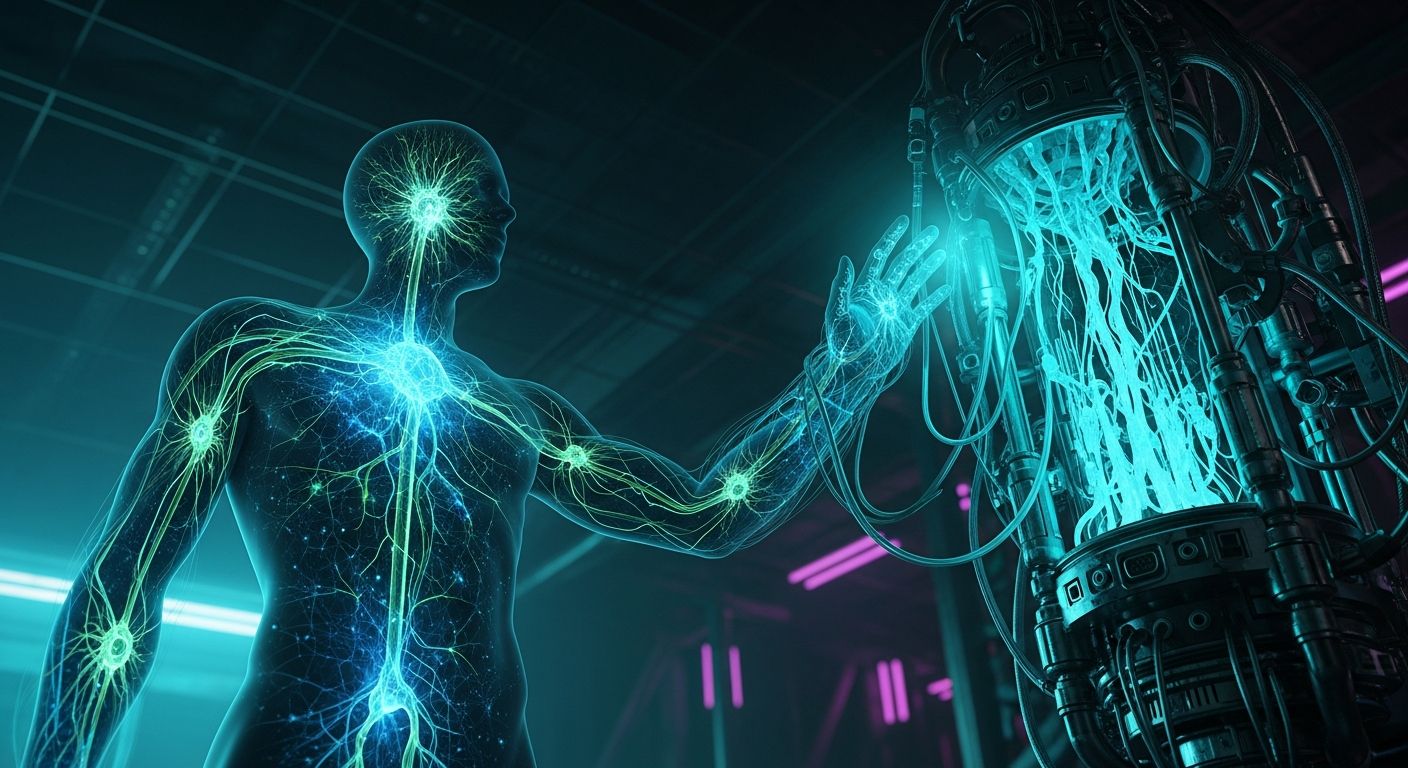
You are jacked in right now. Every AI inference you run goes through a chip somewhere consuming megawatts to do something a petri dish of neurons can approximate on glucose and a $300-a-week cloud subscription.
You don't have to buy a CL1 today. You have to understand the substrate argument before the market does. Silicon is a design choice, not a law of physics. Neurons have been optimizing for intelligence for 540 million years. Silicon's had 75. The energy gap is 1.45 million to one. The learning mechanism is in the hardware, not layered on top of it.
Cortical Labs changed what's possible. DishBrain proved it in 2022. CL1 shipped it in 2025. The solo developer who plugged it into an LLM last March closed the loop.
The Matrix got the substrate right. It just missed the timeline — it's here, opt-in, and available on subscription.
Wake up.
Chris Meredith writes about AI, technology, and what it actually means for real people. Follow along on Substack: monkeyattack.substack.com