The battery lasts two hours. That’s not the interesting part.
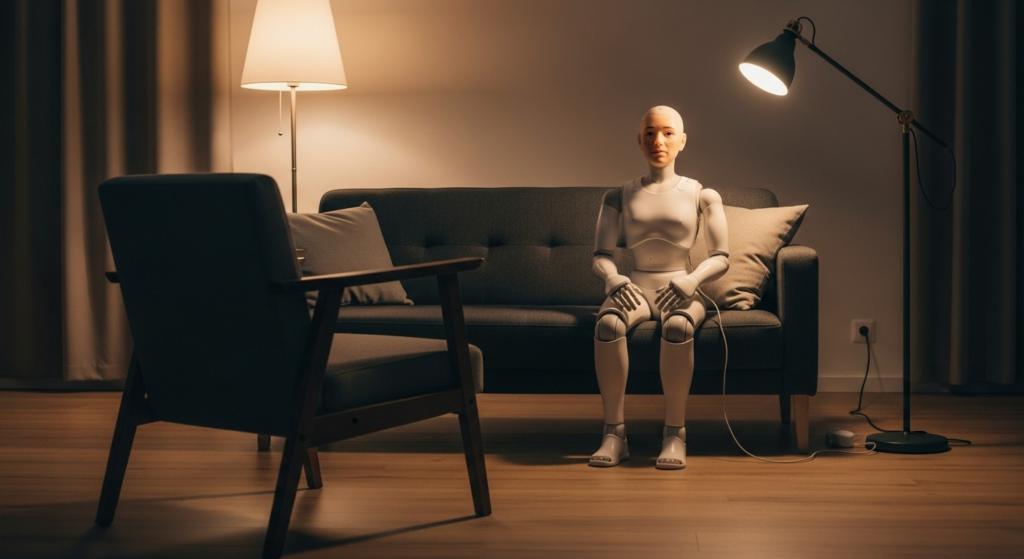
On June 30, a Chinese robotics company called UBTECH opened pre-orders for a humanoid robot named the UWORLD U1. It has silicone skin engineered to mimic human texture. It has hair. It has eyes that track you across a room. It comes in a male version (183 cm, about six feet) and a female version (168 cm, five-foot-six), and it costs 119,800 RMB (roughly $17,600), about what you’d pay for a decent used car.
By launch day, 13,361 people had ordered one.
Let that number sit for a second. This is not a Kickstarter for a gadget. This is a five-figure purchase of a full-size artificial person, sight mostly unseen, with deliveries promised by September 15. The reservation deposit on JD.com was about $450: real money, put down by real people, for a machine whose entire sales pitch is that it will be with you.
Not work for you. Be with you.
What they’re actually buying
UBTECH markets the U1 as “The World’s First Full-Size Mass-Produced Ultra-Bionic Humanoid Robot,” which is the kind of phrase that has been through several committees. Strip the branding and the spec sheet is genuinely striking:
- 88 degrees of freedom, which UBTECH claims covers “up to 90 percent of fundamental human movements,” including a “dual-pivot biomimetic cervical spine” (a neck that moves like yours does).
- An emotion-detection system the company calls “the world’s first emotion-aware LLM,” claiming to recognize more than 20 fine-grained emotional states with an accuracy rate exceeding 90 percent.
- A 500-millisecond response system and lip-sync latency under 20 milliseconds, because nothing breaks the spell faster than a mouth that moves like a dubbed kung fu movie.
- An “Agent Memory OS” that processes data locally with minimal cloud dependency. The robot remembers you, and UBTECH says you own that memory, not them.
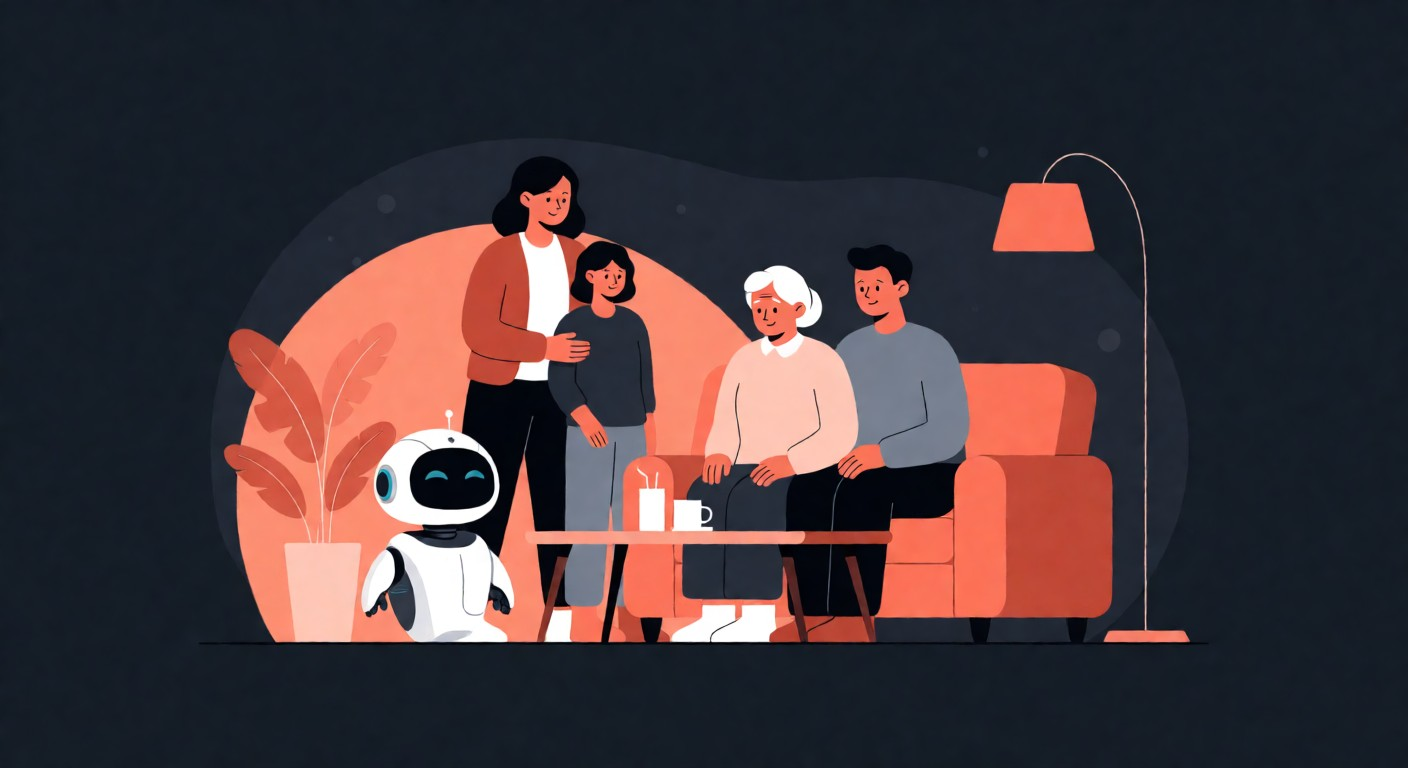
The intended uses, per the company: “daily companionship, emotional support, lifestyle enhancement, and social assistance,” plus elder care, psychological support, reception work, and “premium domestic service.”
Companionship is listed first. That ordering is not an accident.
The gaps, because there are gaps
I want to be fair to the skeptics here, because the skeptics have material.
The battery lasts two to four hours. When critics jumped on this, UBTECH’s response was essentially that’s normal: full-size humanoids typically run two to four hours, which is true and also very funny as a defense. Your emotionally attuned life companion needs to go lie down more often than a house cat.
The launch demos were, by multiple accounts, stiff. The Register described the U1 and its cousins as looking like “creepy pop star action figures — complete with slightly dodgy lip-synch.” There’s already a public row over the decision to ship gendered male and female models at different heights and weights, and you can write the rest of that discourse yourself.
And that “90 percent emotion recognition accuracy” claim deserves the squint you’re giving it. Accuracy against what benchmark? Whose labeled emotions? A model can be 90 percent accurate at matching faces to a training taxonomy and still fundamentally not know what your bad day feels like. “Emotion-aware LLM” is a marketing phrase wearing a lab coat.
So no, I don’t think 13,361 people are getting a soulmate in September. Some meaningful fraction of them are getting an expensive disappointment with a two-hour battery.
But the number is still the story
Here’s what I can’t stop thinking about, though. Every previous wave of humanoid robot hype was sold on labor. Tesla’s Optimus, Figure’s warehouse robots, Boston Dynamics’ Atlas doing parkour. The pitch was always work. Robots would carry boxes, weld seams, unload trucks. The human-shaped machine was a tool that happened to fit human-shaped spaces.
The U1’s pitch is different in kind, not degree. It leads with companionship. It has skin because skin is not a work requirement. It reads emotional states because your forklift doesn’t need to know you’re lonely.
And 13,361 people said yes to that, at a used-car price, in less than a week.
You can’t explain that number with novelty alone. China has over 300 million people over 60 and a fleet of only children who moved to cities their parents didn’t. The elder-care math there is brutal and getting worse, and it’s not much prettier in the US, Japan, or Europe. Meanwhile, every loneliness statistic of the past decade points the same direction. The U.S. Surgeon General was calling loneliness an epidemic back in 2023. The demand for presence, for something in the room that notices you, has been building for years while we all argued about whether chatbots count as friends.
UBTECH didn’t create that demand. They just put a price on it, and 13,361 people paid it before a single unit shipped.
The line we just crossed
There’s a version of this story that’s comfortable to tell: silly gadget, gullible early adopters, vaporware demos, wait for the returns. Parts of that version will come true.
But zoom out and the trajectory is hard to dismiss. Emotion-reading models will get better; that’s just training data and time. Batteries will get better. The skin will get better. The price will fall, because that’s what mass production is for, and “mass-produced” is right there in UBTECH’s tagline. Every embarrassing thing about the U1 is the kind of embarrassing that engineering fixes on a schedule.
What engineering can’t fix, what nobody’s even claiming to fix, is the question underneath the purchase. When a machine can hold eye contact, remember your stories, clock your mood within half a second, and never be too busy for you, some people will prefer it to the messier alternative. Not because the machine is good, but because being known is exhausting to arrange with humans and effortless to purchase from a warehouse in Shenzhen.
I write a lot about the strange places this technology is taking us, and I try to resist both the doom reflex and the demo-day applause. So I’ll just say this plainly: on June 30, 2026, thirteen thousand people looked at a robot with silicone skin and a two-hour battery and decided it was worth five figures to not be alone in the room. The robot will improve every year.
The question was never whether the machines would get good enough to keep us company.
It’s what it says about the company we were keeping before.
Chris Meredith writes about AI, technology, and what it actually means for real people. Follow along on Substack: monkeyattack.substack.com