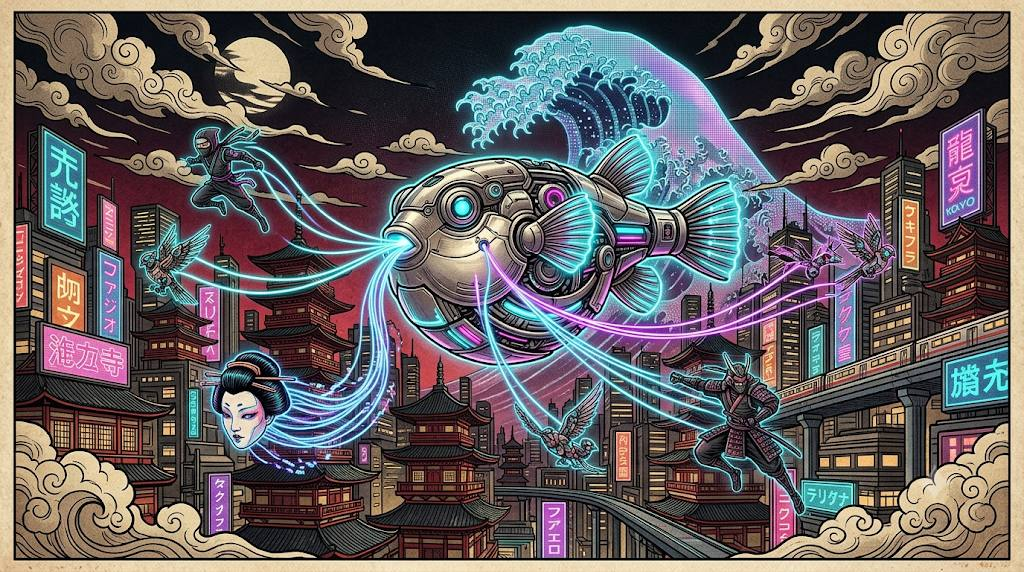
For three years the playbook was simple: bigger model, better output. More parameters, more data, more compute inside one training run. The race to the frontier was a race to build larger. That playbook still works. But it's no longer the only playbook — and Sakana AI's Fugu system makes a technical case for why.
Sakana frames model orchestration as "a new complementary scaling axis beyond ever larger and expensive language models." Not a replacement for scale. A parallel track. One that doesn't require owning the training run — and one that changes what it means to build at the frontier.
Why Now
The timing isn't accidental. Frontier models have become increasingly specialized. GPT-4o isn't the same tool as Claude Opus or Gemini Ultra. They have different strengths, different failure modes, different performance profiles across tasks. That specialization is useful — but it also creates a coordination problem.
If you're building a system that needs to write code, reason about it, verify the output, and explain it in plain language, no single model does all four optimally. The question stops being "which model should I use?" and starts being "how do I assemble the right team for this task, and how do I manage that team?"
That's what Fugu is answering. Not a bigger model. A smarter coordinator.
What Fugu Actually Is
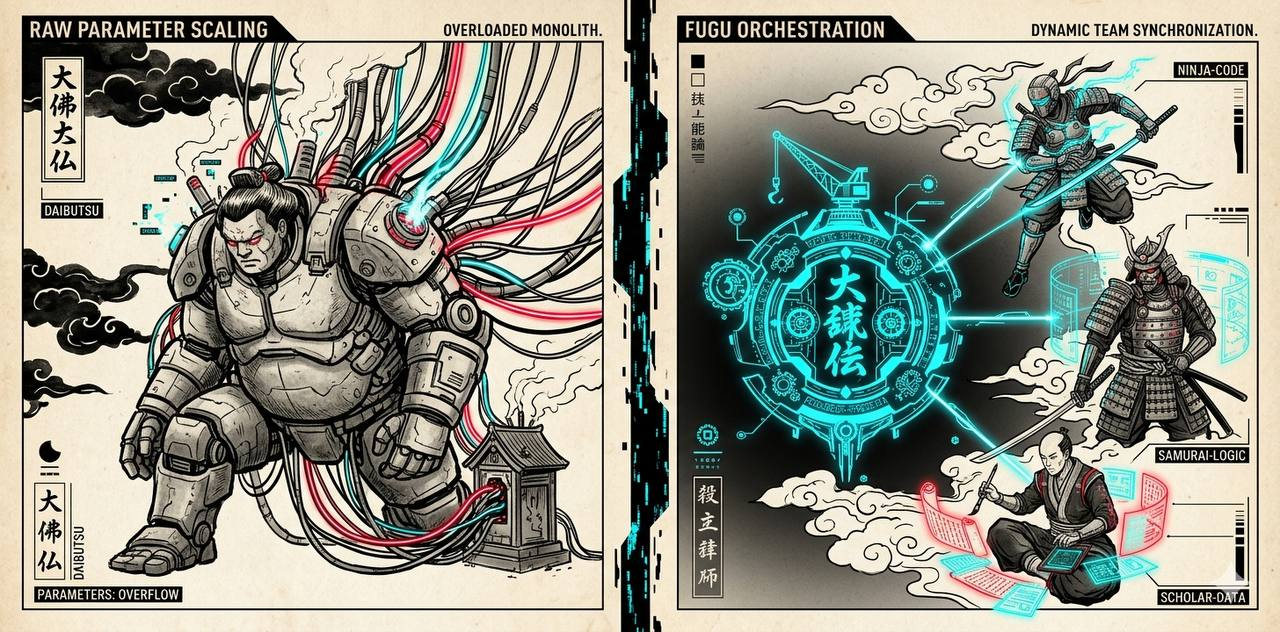
Fugu is a learned orchestrator — trained to assemble a team of existing models, route tasks to the right specialists, verify outputs, and synthesize results. The orchestration logic itself is the model capability. Not a wrapper around models, but a system that treats the scaffold as a first-class component of intelligence.
The key word is learned. This isn't rule-based routing ("if code task, use model X"). Fugu learns which combinations of models, communication patterns, and verification strategies produce the best results on which classes of problems. The coordinator is trained, not configured.
Fugu Ultra is the quality-first tier: deeper orchestration, larger worker pool, willing to trade latency for stronger outputs on hard problems. Competitive on SWE-Bench Pro, LiveCodeBench, GPQA-D, and Humanity's Last Exam — not by training a bigger model, but by building a smarter coordinator over existing ones.
Why This Is a Scaling Axis, Not Just a Pattern
Traditional scaling has a ceiling defined by compute and data access. You need to own the training run, which means capital, infrastructure, and time. Diminishing returns set in. Costs compound. Access to the largest runs is restricted to a handful of organizations.
Orchestration scales differently:
- Better routing decisions as the coordinator learns what works
- Smarter delegation of sub-problems to specialist models
- Verification loops that catch failure before it propagates
- Recovery from partial failure without restarting the whole task
- Specialist selection across a pool of models that already exist and are already improving
The gains compound without requiring a new training run. The system gets better as the models in the pool get better, and as the coordinator learns to use them more effectively. You're not dependent on a single provider's next release.
This is why Sakana frames it as "complementary" rather than "alternative." The largest frontier models will keep getting more capable. But the systems that can coordinate them can extract more capability from the same models than any single-model application can. The coordination layer becomes a multiplier on the underlying capability.
The Practical Case: Resilience
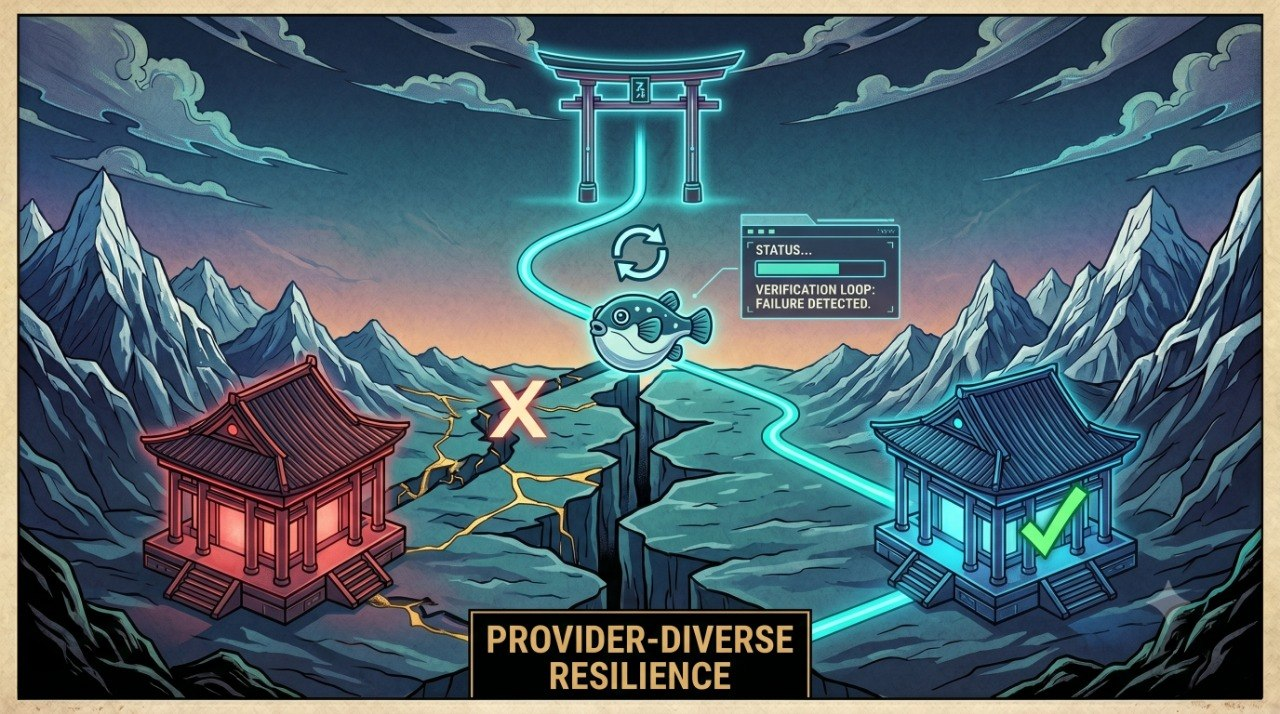
Here's the implication that matters most for anything you're actually building today: if your stack routes through a single provider, you're one policy change or outage away from a full application failure. GPT-4o gets a context window restriction. Anthropic changes pricing tiers. A model gets deprecated with 30 days notice. Your users feel all of it.
An orchestration layer that can dynamically reroute — same task, different model — turns a provider failure into a latency spike instead of a system failure. The application stays up. The degradation is graceful.
This isn't just an engineering win. It's a business continuity argument. It's also a negotiating position: if you're not locked into a single provider, you're not locked into their pricing.
The builders who design for orchestration from the start end up with systems that are more resilient, more flexible, and less dependent on the decisions of any one provider's roadmap.
Conductor, Not Router
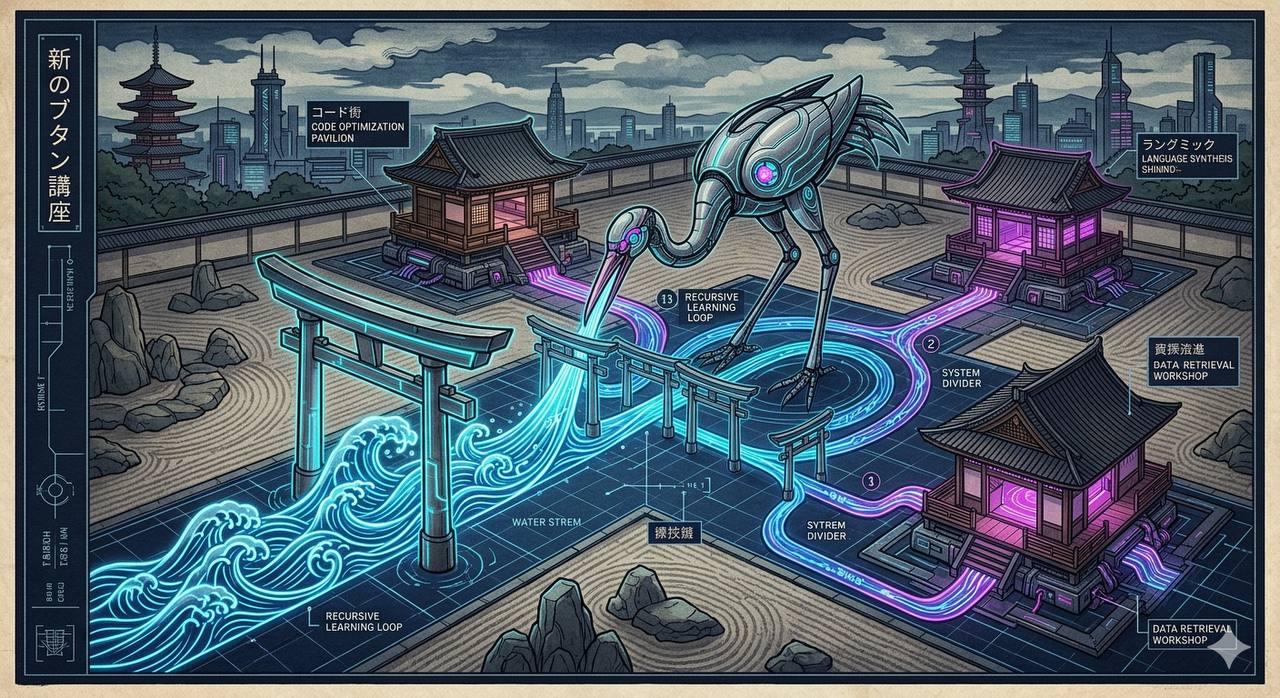
The distinction Sakana draws on Fugu Ultra is worth preserving: it's not a simple router that looks at a task and picks a model. It's a learned conductor that can design multi-step workflows, delegate sub-problems, verify intermediate results, and recurse on itself for correction.
Closer to an AI project manager than a load balancer.
That matters because routing is a solved problem. You can write a routing function in an afternoon. What's harder is building a system that can decompose a complex task, identify which sub-problems need which specialists, verify that the outputs cohere, and recover intelligently when something fails. That's the capability Fugu is actually claiming — and it's a capability that doesn't come from making any single model in the pool larger.
The recursion is particularly interesting. Fugu Ultra can recurse on itself for correction — if an intermediate output is wrong, the coordinator identifies that, reroutes, and tries again with a different approach. That isn't routing. That's something closer to metacognition over a distributed system.
What This Means for Builders
If you're building AI applications right now, the orchestration layer deserves more design attention than it typically gets. Most teams treat it as plumbing — a thin middleware that calls the API and returns the response. Fugu's argument is that the coordination logic is where significant capability lives, and that investing in it pays compounding returns.
Practically, this means:
- Design for provider diversity from the start. Don't let any single provider become a hard dependency.
- Build verification into the workflow, not as an afterthought. If the output matters, have something check it before it reaches the user.
- Think about task decomposition. What parts of your workflow benefit from specialization? Which model does each part best?
- Treat the coordinator as a first-class component. It should be versioned, tested, and improved like any other part of the system.
Takeaway
The question worth asking about any AI system you're building or evaluating right now: where does the intelligence actually live? In the model? In the prompt? Or in the coordination layer between them?
Fugu's argument is that the coordination layer is underbuilt — that most systems are leaving capability on the table by treating orchestration as plumbing rather than as a first-class design decision. Whether or not Fugu specifically becomes the answer, the framing is right.
The next scaling gains won't all come from inside the model. Some will come from how well the models work together. That's a different problem than making a single model larger. And it's one you can start solving without access to a trillion-parameter training run.
Chris Meredith writes about AI, technology, and what it actually means for real people. Follow along on Substack: monkeyattack.substack.com