

On July 27, the Wall Street Journal reported that Nvidia is in talks to guarantee roughly $250 billion of financing so OpenAI can lease a data center campus in southern Ohio. In a separate negotiation, Nvidia is reportedly discussing another $350 billion to help OpenAI buy the chips that will fill it.
Read that sequence again, because the order matters. If the negotiations close as reported: Nvidia backstops the building. Nvidia finances the chips. OpenAI buys the chips from Nvidia. Nvidia books the revenue.
Bloomberg tallied roughly $750 billion in Nvidia deals of this general shape across its entire customer base and used a phrase that has been circling the industry for months: circular financing. Jim Cramer, who is not usually the most cautious voice on a tech rally, told CNBC the structure reminded him of the late 1990s.
He is right, and the resemblance is closer than most people covering this story seem to realize.
The building sits on a decommissioned bomb factory
The physical site is the strangest detail in the whole story, and almost nobody is leading with it.
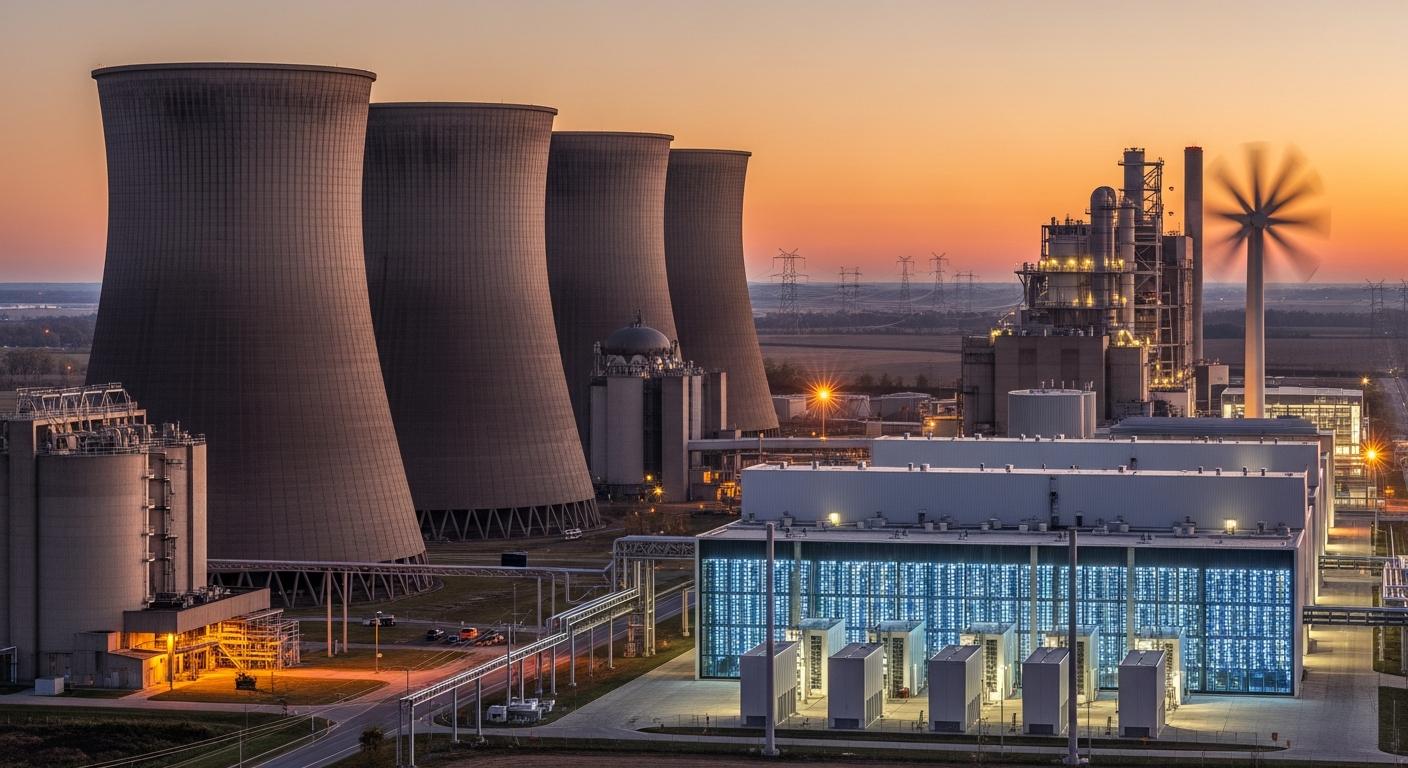
The campus is going up on the grounds of the Portsmouth Gaseous Diffusion Plant in Pike County, Ohio, about 65 miles south of Columbus. That plant started enriching uranium in 1954 for the American nuclear weapons program. It later switched to fuel for commercial reactors. Enrichment stopped in 2001.
Now it is being rebranded the PORTS Technology Campus. The Department of Energy announced the partnership on March 20 of this year. The plan calls for a 10 gigawatt data center paired with up to 10 gigawatts of new generation, including 9.2 gigawatts of natural gas. SoftBank and its energy affiliate SB Energy are building the power side, with SB Energy investing $4.2 billion in grid upgrades and transmission through AEP Ohio. Bechtel and Kiewit have the construction contracts.
The first phase is expected to deliver up to 800 megawatts by 2028. That is enough electricity for roughly 600,000 households.
So the sequence is: a Cold War uranium plant becomes a gas fired power complex becomes an AI campus, and the whole thing may be underwritten by the company selling the processors. The all in cost of the campus and its power build, chips included, could clear $500 billion.
That number is smaller than the $600 billion in the headline because the two measure different things. The $500 billion is what it costs to put the thing in the ground. The $600 billion is financing exposure, and a guarantee on years of lease payments can exceed the build cost of the asset behind it without anything being amiss.
There is something almost too neat about a bomb plant becoming the most expensive private computing project in history. I am not going to pretend that is an argument. It is just hard to look away from.
Why this arrangement makes people nervous
The objection is not that vendor financing is illegal. It is completely legal and often sensible. A supplier helps a promising customer afford the thing the customer needs, the customer grows, everybody wins.
The objection is what it does to the demand signal.
When Nvidia guarantees the lease and finances the chips, the purchase order stops being independent evidence that anyone wants those chips at that price. It becomes evidence that Nvidia was willing to fund it. Two very different facts that look identical on an income statement. This dynamic is not entirely new: we wrote about big tech funding its own competitors and the structural conflicts that follow.
That matters here because of OpenAI’s own numbers, which are all reported rather than filed, since the company is private. Leaked full year 2025 financials published by Fortune in June showed about $21 billion in losses against $13 billion in revenue. By early June of this year the run rate had reportedly reached $25 billion. Two snapshots, a year apart: revenue climbing fast, losses climbing with it. Its ability to make lease payments on a 10 gigawatt campus is a bet on revenue that does not exist yet.
Nvidia would be guaranteeing that bet. And Nvidia would be the beneficiary of the spending the bet enables.
The 1999 version of this, with the receipts
Here is where the historical parallel stops being a vibe and starts being a spreadsheet.
During the telecom buildout of 1999 to 2001, equipment makers lent enormous sums to the carriers buying their gear. Lucent committed $8.1 billion in vendor financing. Nortel extended $3.1 billion, with $1.4 billion still outstanding. Cisco promised $2.4 billion in customer loans. McKinsey later put the combined vendor financing exposure of nine suppliers at about $25.6 billion by the end of 2000.
For a while it worked beautifully. Shipments went out, revenue got booked, and everyone congratulated themselves on spotting an unstoppable secular trend.
Then the carriers ran out of money.
Cisco wrote off roughly $900 million when borrowers defaulted in 2001. Lucent took bad debt provisions of $2.2 billion in 2001 and another $1.3 billion in 2002, about $3.5 billion in customer loan losses. Between 2000 and 2003, dozens of upstart local phone companies, the ones the industry called CLECs, filed for bankruptcy. Covad, Focal Communications and NorthPoint were among them.
The equipment was real. The fiber was real. Most of it got used years later by companies that bought it out of bankruptcy for cents on the dollar. What was not real was the timing, and the balance sheets were built on the timing.
What is genuinely different this time
I want to be fair to the bull case, because there is one.
In the analogy, Nvidia is Lucent and OpenAI is the carrier. That is where it breaks down. The telecom carriers of 1999 were mostly startups with no customers, laying fiber into a demand curve they had invented. OpenAI has hundreds of millions of users and a real, large, fast growing revenue line. Demand for inference compute is not speculative. It is the constraint.
Nvidia is also not Lucent, and a $250 billion guarantee is not a $250 billion loan. That is the strongest card in the bull case. Lucent and Nortel had already handed over the money, so the loss was booked the moment a carrier failed. A guarantee puts nothing on the balance sheet until a default happens. Nvidia is promising to catch a falling knife, not holding one.
And there is a strategic logic here that has nothing to do with financial engineering. This deal would give OpenAI control of its own infrastructure for the first time instead of renting capacity from Microsoft, Amazon and Oracle. That is a genuinely different competitive position.
The part that should still bother you
None of that resolves the core problem, which is epistemic rather than financial.
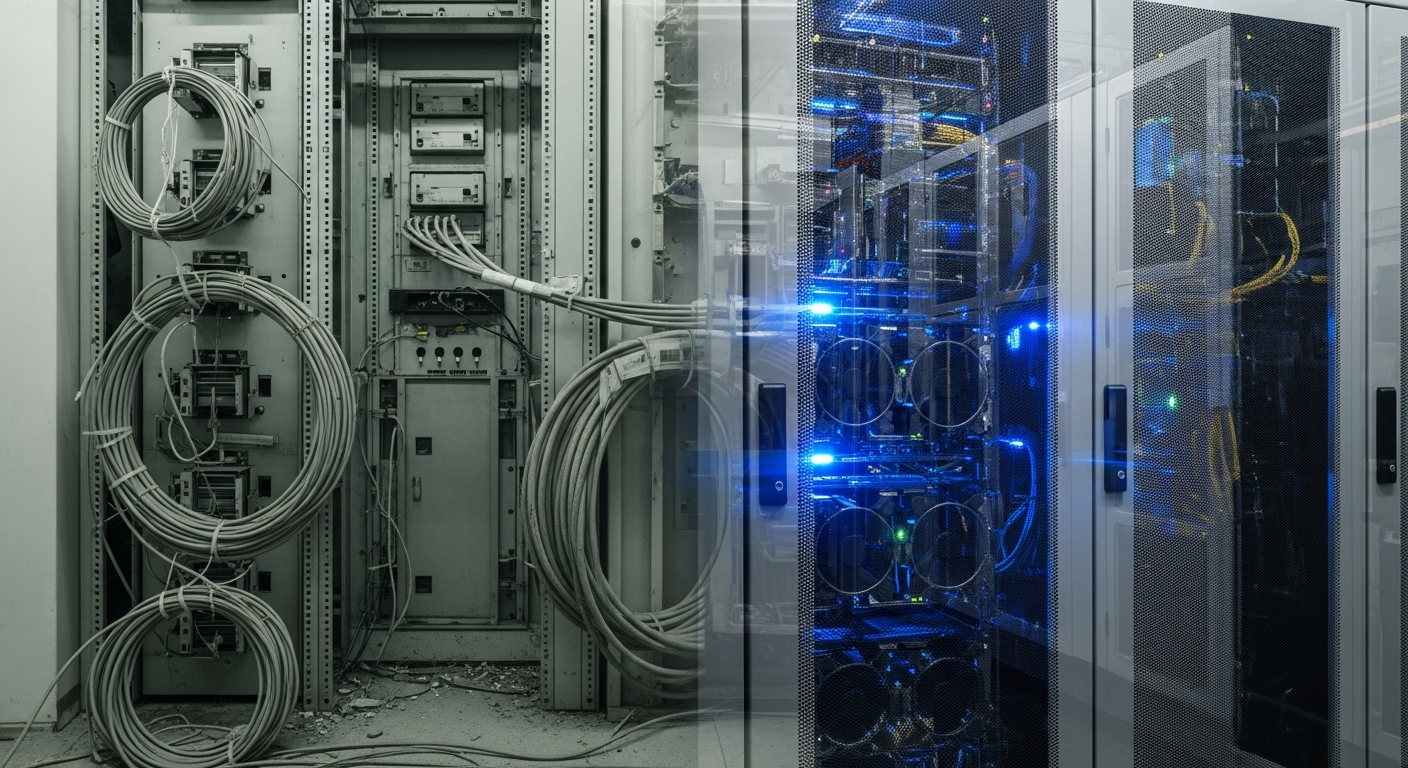
The AI buildout is being justified by demand figures. Increasingly, those figures are being generated by the same companies supplying the equipment. If these deals close as reported, and Nvidia guarantees the leases, finances the chips, and books the sale, the market loses its ability to tell an independent demand signal from a self funded one until something breaks. That is not an accusation of bad faith against anyone. Nobody has to be lying for a structure to degrade the information it produces.
The scale is what makes this urgent. Lucent, Nortel and Cisco together were playing with about $14 billion in commitments. Widen the denominator to McKinsey’s tally of nine suppliers and you get about $25.6 billion. Nvidia is reportedly negotiating a pair of arrangements worth roughly twenty three times that larger figure, and more than forty times the smaller one, on a site chosen because the federal government already had the land and the transmission rights sitting idle.
The chips will most likely get built. The campus will most likely get powered. The question is not whether any of this is real.
The question is who is holding the paper when we find out what it was worth.
Sources: Wall Street Journal, Bloomberg, CNBC, Axios, Fortune, U.S. Department of Energy, Engineering News-Record, DataCenterDynamics.
Chris Meredith writes about AI, technology, and what it actually means for real people. Follow along on Substack: monkeyattack.substack.com