For the last two years, the standard pitch in robotics has been that the software problem is mostly solved. The models know what to do. The hardware is catching up. Pick a task, load the instructions, watch the arms move.
The arms were the easy part.
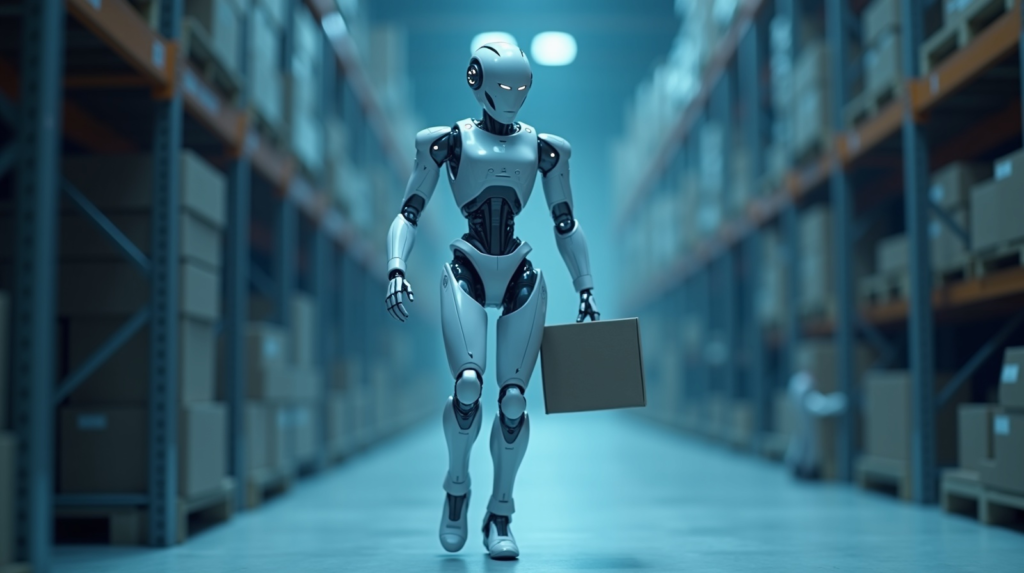
On July 30, Google DeepMind released Gemini Robotics 2, and the thing that stands out isn’t the name upgrade. It’s what changed: for the first time, the model controls the whole body. Legs, torso, arms, and hands. Not as separate systems running in parallel. As one coordinated motion, the same way a person carries a cup of coffee while walking down stairs without thinking about either thing separately.
That gap between “upper body works” and “whole body works” looks small from the outside. It’s not.
What the Previous Version Couldn’t Do
Gemini Robotics 1 could manage a robot’s upper half reasonably well. Arms, hands, camera input, object recognition. The legs were a separate problem, handled by a different system that kept the robot upright while the arm controller did its work.
The result was robots that performed well on a bench but struggled the moment the task required movement. Pick an object off a table? Fine. Pick an object off a table while walking across a room, adjusting for balance, and handing it to someone standing at an awkward angle? The two systems would fight each other, and the robot would lose.
This isn’t a minor edge case. Real work almost always involves movement. Warehouse tasks, home assistance, construction support, surgical prep. The moment a robot needs to carry something from one place to another, the “arm brain” and the “leg brain” have to agree. That coordination problem has been the quiet blocker sitting behind all the optimistic robotics projections for the past five years.
The Architecture Change
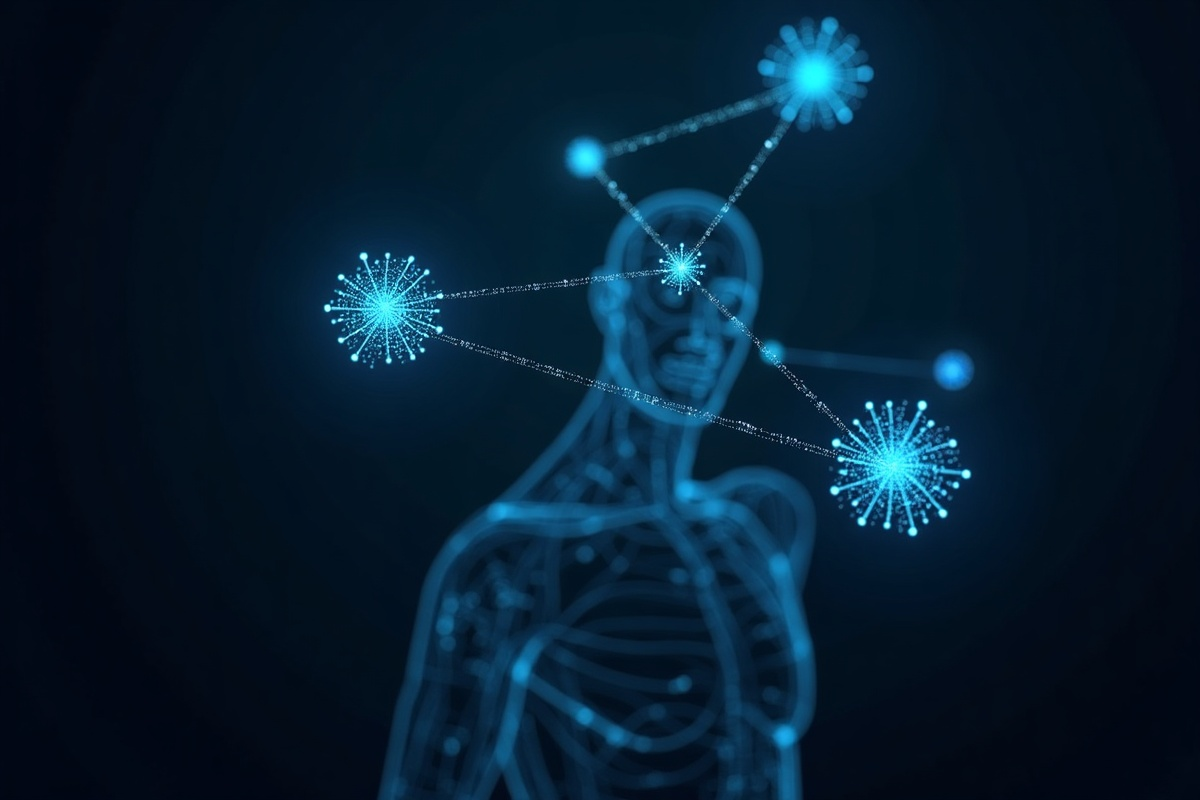
Gemini Robotics 2 uses three models working together.
The first is a Vision-Language-Action model. It takes camera input and natural language commands and translates them directly into coordinated motor instructions across the full body. Not a plan for what to do next. Actual movement instructions, continuously updated as the environment changes.
The second is an Embodied Reasoning model, designed for multi-step planning and multi-robot coordination. It handles the higher-level decisions. Figuring out the order of operations. Routing tasks between machines when more than one robot is working the same job.
The third is an On-Device controller that handles real-time physical adaptation. It runs locally on the robot, without cloud round-trips, enabling rapid response to physical conditions as they change. When a robot catches an unexpected surface or needs to adjust mid-reach, that correction can’t wait for a network request. Local execution with rapid on-device adaptation is the only architecture that works at that speed.
In tests on multi-finger dexterity using Apollo and SharpaWave robot hands, the system reached 36% success screwing in a light bulb and 92% unscrewing one. Those are the honest numbers: a range, not a single flattering headline. The 36% end shows where fine motor manipulation still struggles. The 92% end shows what the upper bound looks like when the task aligns with the hardware. Both are worth paying attention to, and the gap between them is where most of the hard work still lives.
The Part That’s Easy to Miss
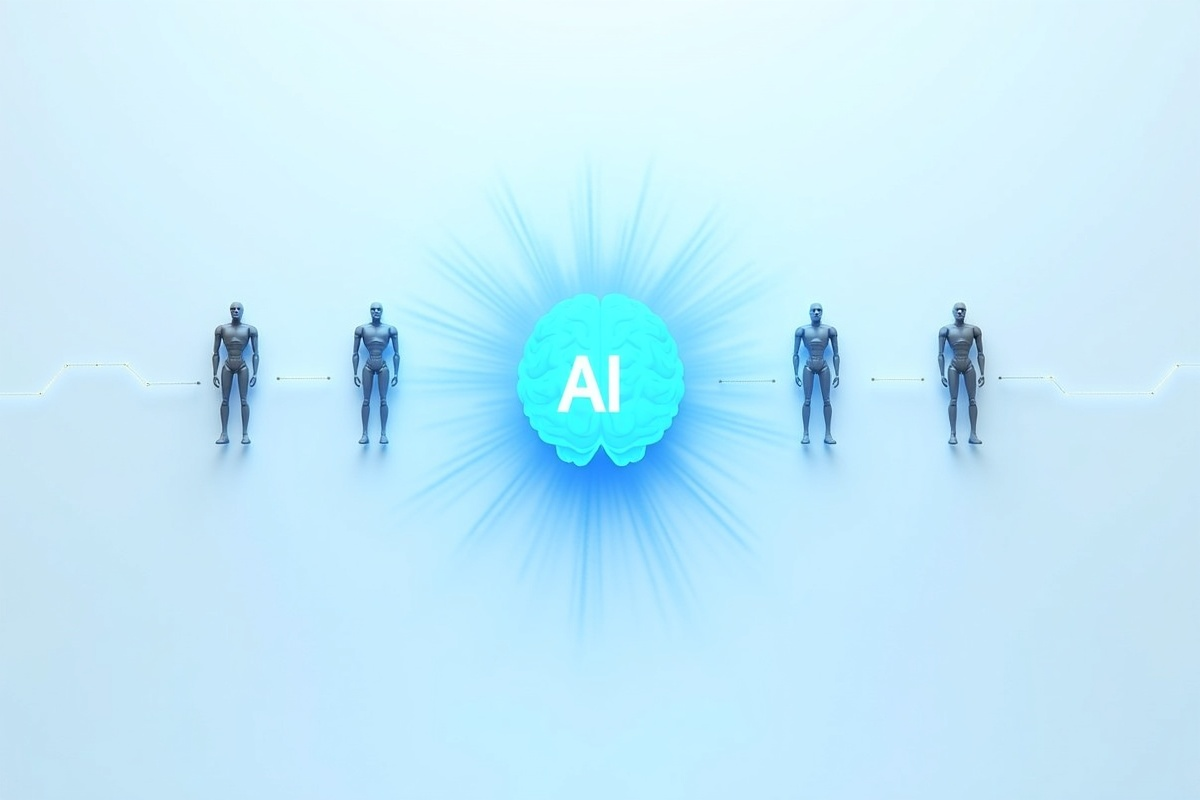
The headline capability in the announcement is whole-body control. The detail that matters more for what comes next is this: Gemini Robotics 2 can adapt to a new robot body in a matter of hours.
That’s not obvious, and it’s not how machine learning has traditionally worked in robotics.
Until recently, if you trained a model on Robot A and then put it in Robot B, even one with a nearly identical physical design, the model would fail. The joint positions were slightly different. The sensors were in slightly different locations. The weight distribution was slightly off. Retraining from scratch could take weeks or months.
The Gemini Robotics 2 architecture generalizes across hardware configurations quickly enough that Google says new robot bodies are accessible to early partners within hours of onboarding. That’s a logistics claim as much as a technical one. It means a company that builds a new humanoid platform doesn’t have to wait for a years-long training run before the software becomes useful. It means the same model can run across a fleet of different robot types without being rebuilt for each one.
If that holds outside of controlled conditions, it changes the deployment math for robotics companies significantly. Right now, a lot of robotics investment is going into training data, and a lot of that training data is hardware-specific. A more portable model architecture makes the data more valuable across a wider base.
The Honest Caveat
Google’s announcement notes that delicate manipulation is still a long-term goal.
This matters because delicate manipulation is what separates a robot that can stock shelves from a robot that can handle a hospital supply chain, pick strawberries without bruising them, or sort fragile electronics. Full-body coordination is a necessary step toward those applications. It’s not sufficient on its own.
The 36-to-92% dexterity range is genuinely informative. The lower end, the 36%, is the part that will define where this technology can actually be deployed at scale. Industrial tasks with high tolerance for occasional failure are different from tasks where failure is unacceptable or expensive.
The practical ceiling for Gemini Robotics 2, in its current form, is probably logistics, warehouse work, and structured environments where the task set is predictable and the consequences of a failed attempt are low. That’s a large market. It’s not the market that robotics companies describe when they talk about the long-term vision.
Why This Release Is Worth Watching Beyond the Tech
The timing of this announcement connects to something larger.
In 2025 and into early 2026, the robotics investment story was mostly about humanoid hardware. Companies raising hundreds of millions to build the robots. The assumption was that once the hardware was good enough, you’d drop capable AI in and the product would work.
That assumption was always a little optimistic. The hardware can walk. The hardware has hands. The question was always whether the software would be intelligent enough to use them. Gemini Robotics 2 is Google’s answer to that question, released in a year where several of the big humanoid hardware players, Agility Robotics, Figure, 1X, and others, are starting to move from development into actual commercial deployment.
The timing isn’t a coincidence. The hardware is ready enough. The software race is now.
What Gemini Robotics 2 represents is Google staking out a position as the brain provider for the next generation of robot hardware, in the same way that Android became the software layer for an entire generation of mobile devices that Google didn’t build. Whether that analogy holds depends on whether the deployment claims hold up outside of lab conditions and early partner environments.
But the architecture choice, a general model that adapts to new hardware quickly rather than a purpose-built model trained for a specific robot, is a real bet. It’s the kind of platform play that either turns into the operating system of the robotics era or gets displaced by something with better fine-tuning on specific hardware.
Either way, the competition just moved from “who can build the best robot body” to “who owns the software that runs them all.” That is a different race. And Google just showed its hand.
What to Watch Next
The announcement is an early partner rollout. It’s not a general release. The performance numbers come from Google’s own testing environment.
The next meaningful data point is third-party deployment. How well does the system perform when a hardware partner with a different robot architecture uses it in a real facility, not a lab? How long does the adaptation actually take when the hardware is genuinely novel? What happens to the benchmark numbers when the task environment is less controlled?
Those questions will take months to answer. But the direction is clear.
The previous constraint in robotics wasn’t that robots lacked good hardware. It was that the software could not coordinate the hardware across the whole body, across different hardware platforms, in real time. Gemini Robotics 2 is a direct claim that constraint is being removed.
That claim deserves scrutiny. It also deserves attention.
Chris Meredith writes about the technology that is changing what work looks like. This is his regular column on AI, robotics, and the future of human-machine systems.
Related reading
- Robotic Pharmacy: 60-Second Prescriptions
- Orchestration Is the New Parameter Count
- Kimi K3 Distillation Beats Claude on Frontend Code
Chris Meredith writes about AI, technology, and what it actually means for real people. Follow along on Substack: monkeyattack.substack.com