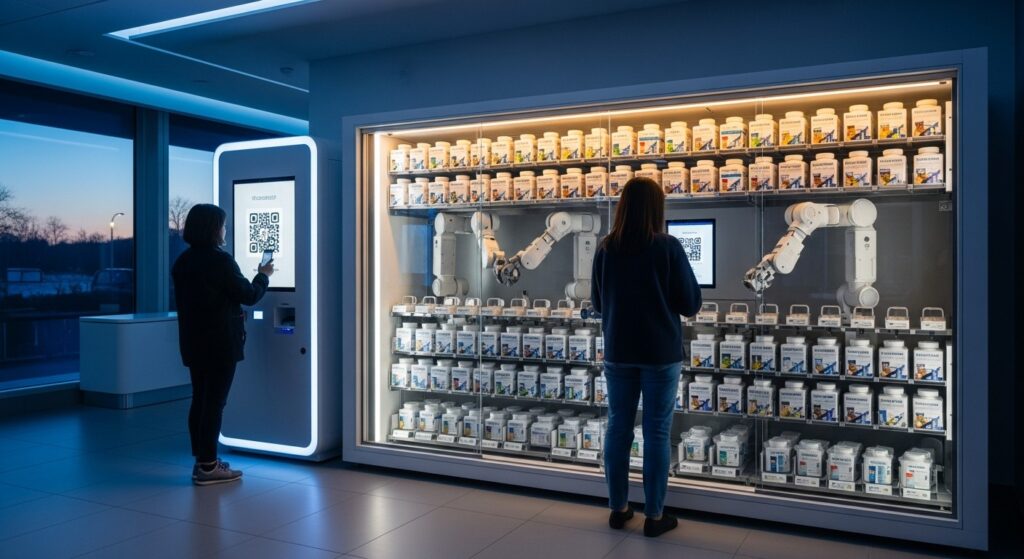
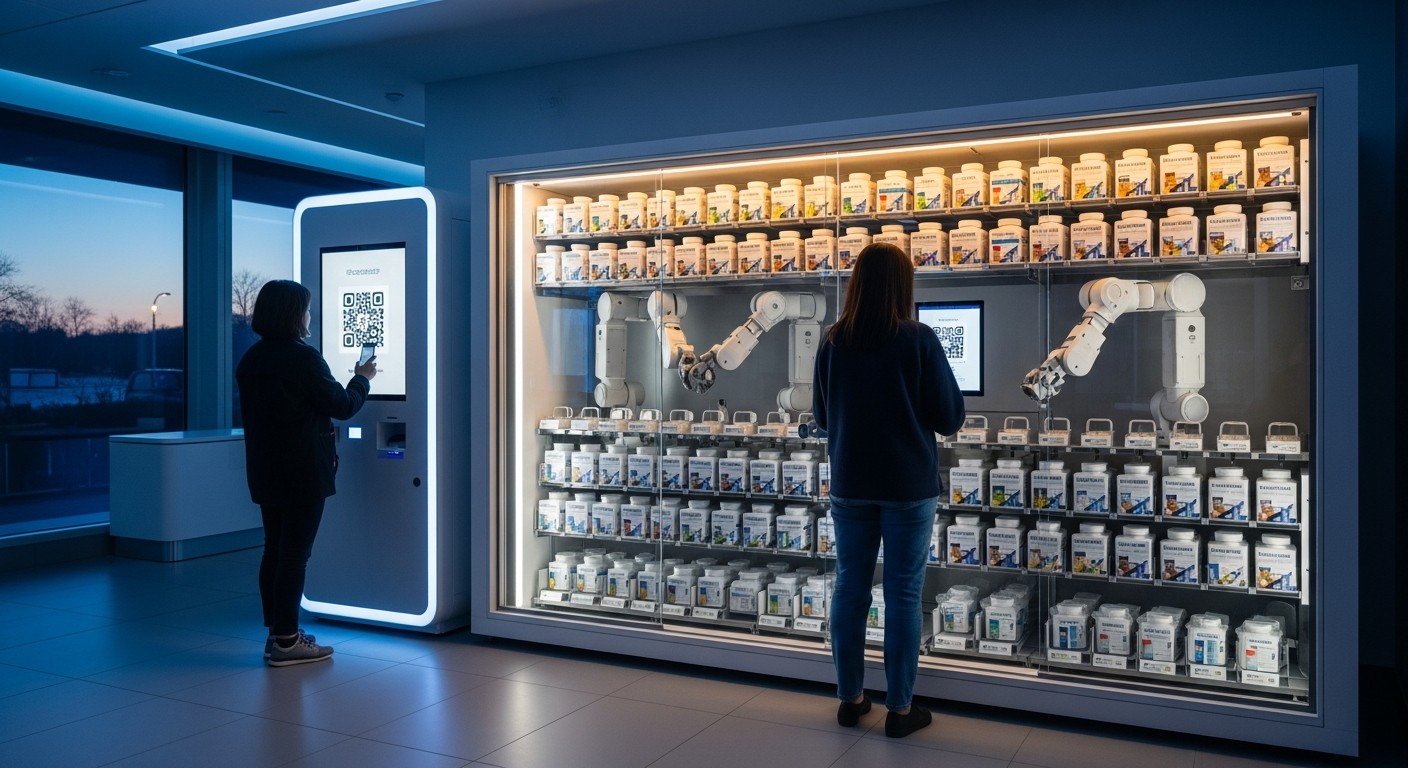
Picture the moment. You walk up to a kiosk in Palo Alto, scan a QR code on your phone, and somewhere behind the glass a machine reads the National Drug Code printed on a sealed manufacturer bottle, counts out your pills with a camera watching every single one, drops them into a labeled vial, seals it, and slides it out to you. Sixty seconds, start to finish. No line. No “come back in twenty minutes.” No pharmacist.
That last part is the story. A startup called Queue just demonstrated what it says is the world’s first fully autonomous pharmacy, and the detail that separates it from every pharmacy robot before it is not the speed. It is the staffing plan. There is no on-site pharmacist. Not a reduced role, not a remote check-in station. None.
I have spent enough time around automation stories to know the pattern: the demo is real, the headline number is real, and the interesting part is everything the press release skips. So let me walk through what actually changes when the last human touchpoint at the pharmacy counter goes away, because it is a much bigger deal than a fast vending machine.
The error rate argument is real, and pharmacists know it
Here is the uncomfortable truth the profession does not advertise. The landmark study on community pharmacy accuracy, run by Auburn University researchers and published in 2003, found a dispensing error rate of about 1.7 percent. That is roughly four errors per 250 prescriptions per day in a typical pharmacy. Most were harmless. Some were not. Scaled across the billions of prescriptions filled in the United States every year, that percentage becomes tens of millions of mistakes.
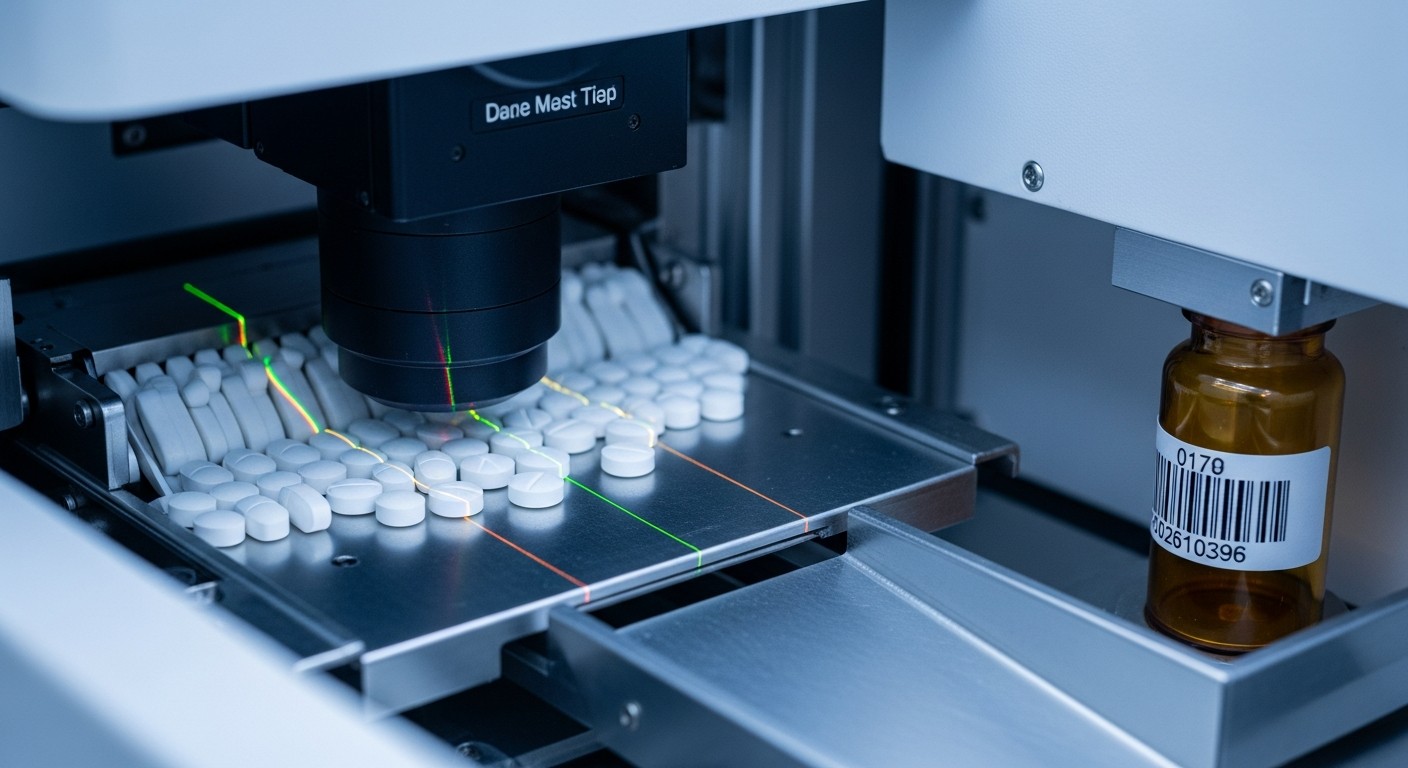
Robots do not have that problem, or at least not at that magnitude. A study published in the Journal of Pharmaceutical Health Care and Sciences tracked a hospital before and after installing a robotic dispensing system and watched unprevented dispensing errors fall from 0.015 percent to 0.002 percent. That was a hospital rather than a retail counter, a different setting with different pressures, but the direction is hard to argue with. A 21-month study of a robotic pharmacy in Saudi Arabia reported zero dispensing errors over the entire period. These are not marketing claims. They are peer-reviewed results, and both point the same direction.
So when a pharmacist tells you a robot cannot be trusted to fill your prescription, the honest response is: compared to what? The human baseline is not perfection. The human baseline is a tired professional filling their two hundredth script of the day while the phone rings and a customer argues about insurance at the counter. Machine vision that verifies the drug code on the source bottle and watches every single count does not get tired at hour nine.
But that argument, true as it is, only covers half of what a pharmacist actually does. And this is where the story gets complicated.
Counting pills was never the whole job
The dirty secret of retail pharmacy is that the dispensing part, the part Queue just automated, is the part pharmacists themselves have complained about for decades. Pharmacists graduate with doctoral degrees and spend their days verifying counts and fighting with insurance systems. The clinical work, the part they trained for, gets squeezed into the margins.
That clinical work matters more than most people realize. A pharmacist is the last professional who sees your full medication list before the drugs enter your body. They catch the interaction your cardiologist did not know about because your psychiatrist prescribed something last month. They notice the elderly customer who seems confused about which pill to take when. They flag the opioid script that looks wrong. None of that shows up on a receipt, which is exactly why it is easy to automate past it.
Queue’s system currently handles about 250 common medications. Interaction screening can be done in software, and honestly, software already does most of it today; pharmacists work from automated alerts too. But the judgment layer, the human who decides whether the alert matters for this specific patient standing in front of them, does not fit in a kiosk. The optimistic version of this future is that automation finally frees pharmacists to do full-time clinical consultation, medication therapy management, and prescribing under collaborative practice agreements. The pessimistic version is that the chains simply pocket the savings and the judgment layer quietly disappears for anyone who cannot afford a concierge service.
Both futures are plausible. Which one we get is a policy fight, not a technology question.
The access story cuts in automation’s favor
Here is the part I find genuinely exciting, and I say that as someone generally allergic to robot hype. Pharmacy deserts are real and getting worse. Hundreds of communities, both rural towns and low-income urban neighborhoods, have lost their only pharmacy in the past few years as chains close thousands of underperforming stores. When a pharmacy needs a licensed pharmacist on site to operate, the economics of a town of 1,200 people simply do not work.
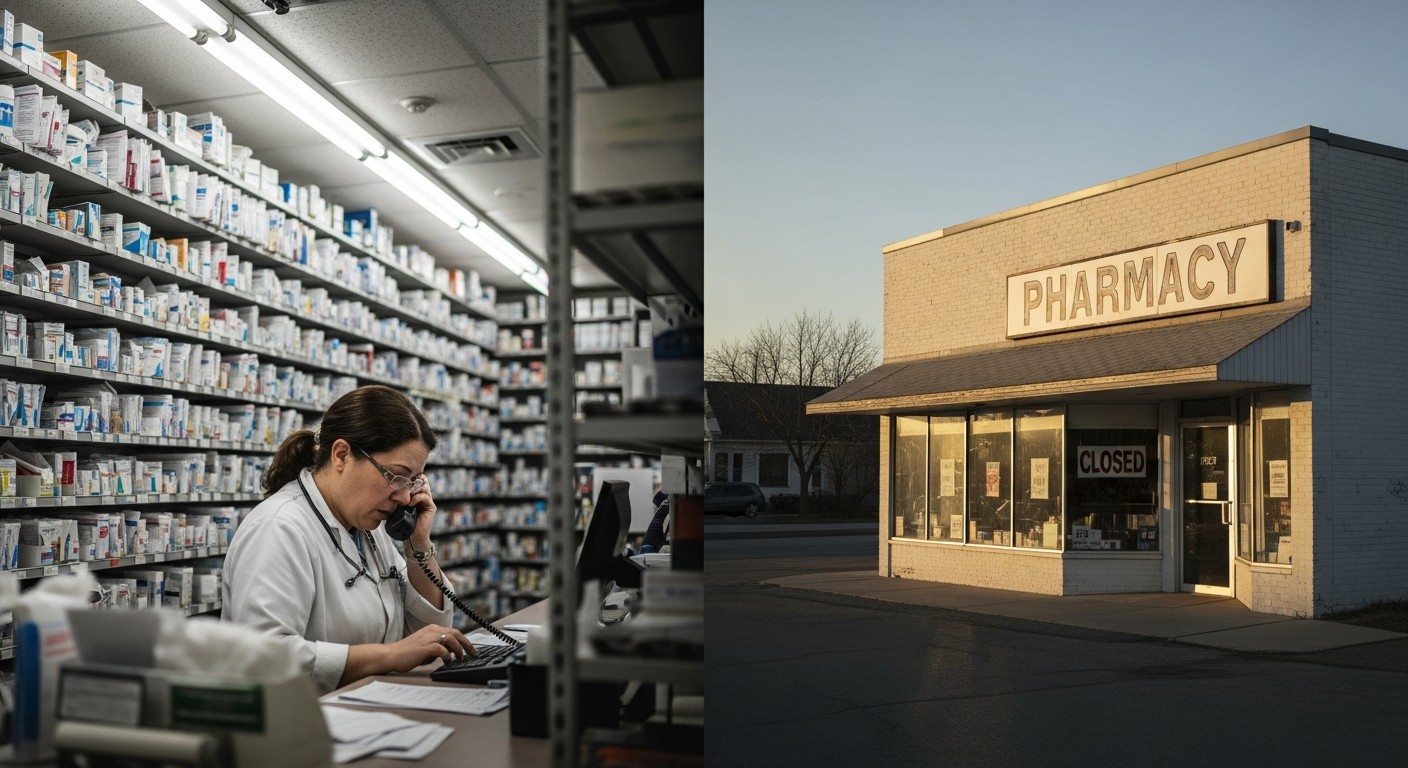
A kiosk that fills prescriptions for 96 percent less than a traditional pharmacy’s fulfillment cost, which is Queue’s claim, changes that math completely. A machine in a grocery store or a clinic lobby, backed by a remote pharmacist available by video for consultations, could put dispensing back within driving distance of people who currently mail-order their heart medication and hope the postal service cooperates. For those communities the choice was never robot versus pharmacist. It was robot versus nothing.
Now the hard question: who gets sued?
When a human pharmacist dispenses the wrong drug, the liability chain is well established. The pharmacist holds a license, carries malpractice exposure, and answers to a state board. When an autonomous kiosk dispenses the wrong drug, who exactly is negligent? The startup that built the vision system? The chain that deployed the kiosk? The remote pharmacist who nominally supervised a machine they never saw?
State pharmacy boards have spent a century building regulation around a licensed human being physically present at the point of dispensing. Most states still require it, and even the states with telepharmacy carve-outs assume a licensed pharmacist is supervising in real time. Queue’s model has no supervising pharmacist at all. Queue’s commercial rollout, targeted for early 2027 with a major national chain reportedly piloting a prototype, will collide head-on with those rules, and the collision will be resolved state by state, lobbyist by lobbyist. My prediction: the first serious dispensing error by an autonomous system will produce a lawsuit that names everyone in the chain, and the settlement will quietly define the industry standard before any legislature gets around to it. That is how liability law usually gets written in this country, in the wreckage of the first bad case.
Watch the insurance angle too. Pharmacy benefit managers and hospital systems will see that 96 percent cost reduction and want it. If history is a guide, very little of the savings will reach your copay. It will show up as margin, and the pressure on remaining human pharmacists will increase, because they will now be competing against a machine’s cost structure.
What I would actually bet on
The 60-second fill is real and it is coming. Queue raised $18.6 million and has a commercial rollout planned. Even if this particular startup stumbles, someone will ship this, because the technology works and the economics are overwhelming.
But I do not believe the pharmacist disappears. I believe the pharmacist gets unbundled. The counting and labeling goes to machines, where frankly it should have gone years ago, given the error data. The clinical judgment either becomes the profession’s whole job, elevated and properly paid, or it gets rationed into a video call queue and effectively lost. The technology permits both outcomes and dictates neither.
So the next time you are standing in line at a pharmacy watching one overworked professional juggle phones, insurance rejections, and a wall of prescriptions, remember that the machine that replaces the counting is not the threat to your safety. The threat is deploying that machine and quietly deleting the judgment that used to come with it. Ask your state legislators which version they are voting for. They are deciding it right now, whether they know it or not.
Chris Meredith writes about AI, technology, and what it actually means for real people. Follow along on Substack: monkeyattack.substack.com