
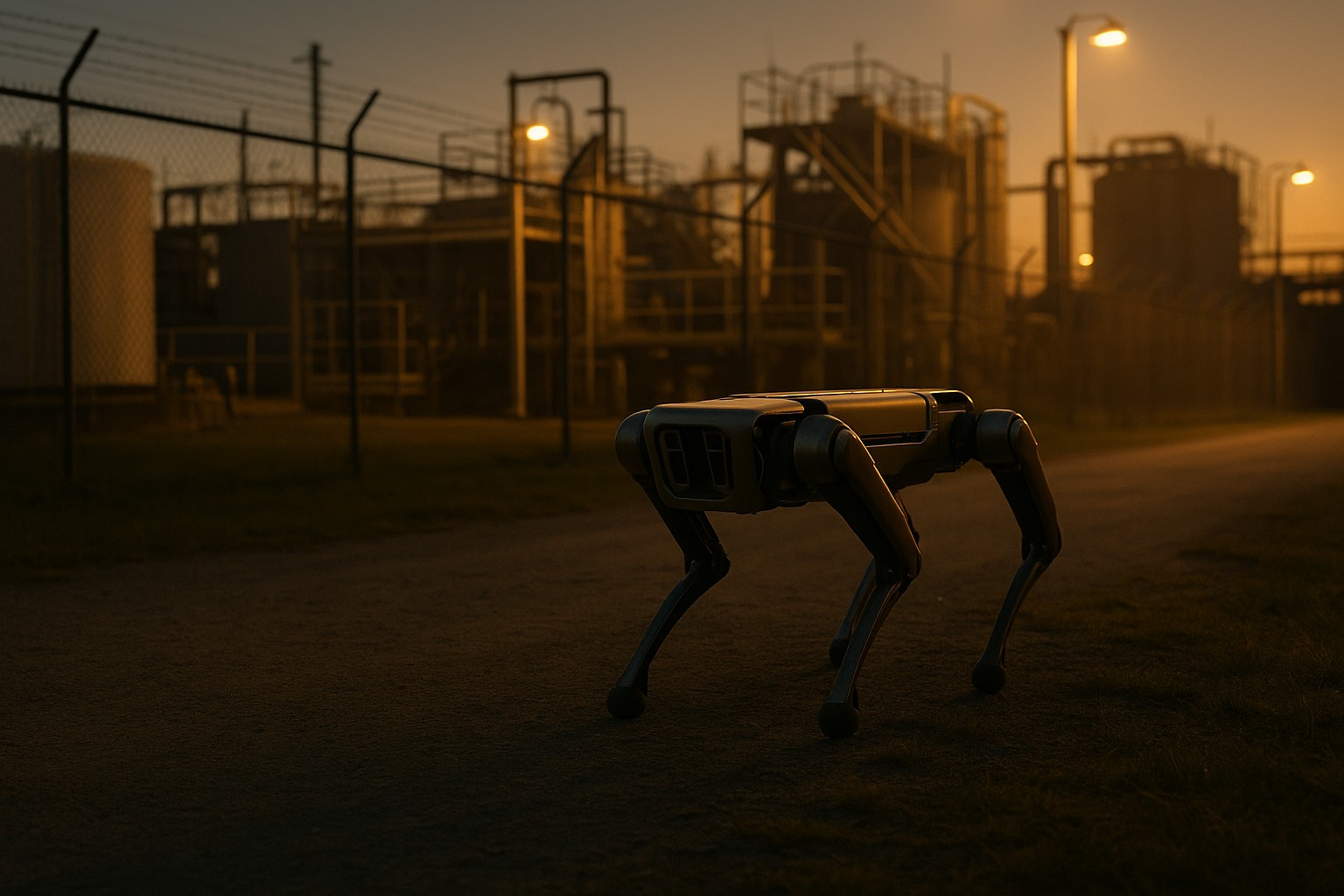
Late July brought a regulatory ruling that most people skimmed past. The Federal Communications Commission announced it’s banning imports of new humanoid and quadruped robots from overseas, citing national security concerns. Two-legged machines, four-legged “robot dogs,” the whole category. It sounds like a bigger deal than it probably is, and also like less of a deal than it probably is.
There’s more going on here than the headline suggests.
What the FCC actually did
The short version is that new foreign robot models can no longer be imported. Humanoid robots and quadruped machines need FCC authorization, and new models from overseas aren’t getting it. If you already have one, or if it was authorized before the ruling, nothing changes. The government itself is exempt from the restriction, which is worth noting. Federal agencies can apparently keep buying the things that civilian companies now can’t.
The official justification came from a White House task force. Foreign-built robots could create “a cybersecurity risk that threatens the security of critical infrastructure,” and pose a threat to “the safety and security” of U.S. residents. FCC Chair Brendan Carr called it a matter of protecting “America’s supply chains.”
Nobody says China in the official documents. Nobody has to. China makes roughly 85% of humanoid robots sold globally. That number is pretty much the entire story.
Why the timing is the real story
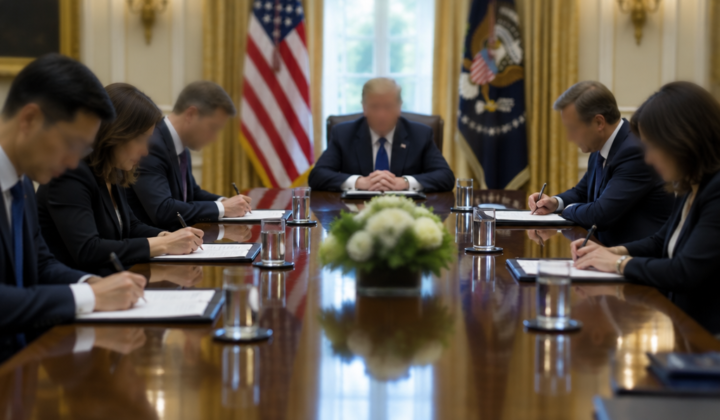
Most coverage glossed over this: the ruling came out days before Xi Jinping was scheduled to sit down with President Trump in Washington. That’s probably not a coincidence. Announcing a big trade restriction right before a high-stakes diplomatic meeting is an old playbook move. You’re negotiating, and this is a chip.
Beijing called it protectionism. That’s partly right. The ban does protect U.S. robot manufacturers. It’s also kind of beside the point, because the cybersecurity rationale isn’t entirely made up either. I think both things can be true here.
My read is that this is less about robots specifically and more about supply chain decoupling. The Huawei situation in 5G is probably the clearest precedent: once overseas hardware gets deeply embedded in critical systems, it becomes extremely hard to dislodge. The robots-in-hospitals, robots-in-warehouses scenario is the same dynamic, one step ahead of where we are now. The FCC is trying to get ahead of the market before it locks in.
Whether that actually produces a viable domestic alternative is a different question. Building competitive robots is hard. Building them at China’s cost and volume is significantly harder. There are good companies working on this in the U.S., but they’re not there yet.
The near-term reality
Probably not much in the near term. If you work in a warehouse or a hospital, the robots you interact with aren’t going away. Supply chains adjust slowly, and the shift here will mostly be invisible as it happens.
For companies that were actively planning to buy overseas robots at scale, though, that option just got taken off the table. U.S. and allied-country alternatives exist, but they’re more expensive and harder to source in bulk.
The longer argument for the ban is that closing off the dominant external supplier creates room for American companies to scale up. That’s a reasonable theory. Whether it plays out that way depends on whether the investment and the time actually materialize.
I’m skeptical that national security is the only reason this happened. The timing and the trade context make it pretty hard to read as purely a security move. But I’m not going to pretend the security concern doesn’t exist either. Robots embedded in key infrastructure, running software maintained abroad, are a real vulnerability in principle.

What happens next
The next year is the one to watch. Companies like Agility Robotics, Figure, and 1X are positioned to step into the gap, but scaling up takes money and time, and this ruling doesn’t automatically produce either. There’s a lot of “could” in what happens from here.
The Xi-Trump meeting is also worth watching closely. If this ban was mostly a negotiating move, the situation could look quite different once those conversations actually happen. Trade restrictions introduced as bargaining chips have a way of quietly disappearing when they’ve served their purpose, and this one was introduced in a context where that’s a real possibility.
For now, the ruling is in effect and the market is adjusting to it. Whether the U.S. ends up with a stronger domestic robotics industry or just a gap where the cheaper imports used to be is genuinely unclear. The next few years will tell us which way this goes.
Chris Meredith writes about AI, technology, and what it actually means for real people. Follow along on Substack: monkeyattack.substack.com