A viral Instagram reel this week passed along a bold claim from neuroscientist Andrew Huberman: Meta, OpenAI and Anthropic aren’t really language model companies, and they’ll all end up as biotech companies. The reel stitched that together with a Nobel Prize and a Neuralink record to make it sound like a trend line. So I checked each piece.
Some of it holds up. Some of it is the reel’s own framing dressed up as Huberman’s. And the biggest part is still a prediction, not a plan anyone at those companies has announced.
What Huberman actually said
The prediction comes from Episode 494 of the Invest Like The Best podcast, titled “Reading and Writing the Brain”, not from a book tour as the reel suggests. He does mention his book, Protocols, in the conversation, but that’s as far as the book connection goes. I checked the wording against the episode’s English YouTube transcript, and the reel’s version is close to verbatim. At roughly 24:56 in the episode he says:
“I’ll go on record saying this, anyone who thinks that Meta, OpenAI, Anthropic, or well, Elon’s got Neuralink as his stated neural interest, anyone that thinks that those are LLM AI companies is perhaps going to be surprised at this prediction. Every single one of those is going to be a biotech company. They’re all interested in the brain.”
He goes on to say the people running those companies “may not have formal training” in neuroscience but “understand a lot of neuroscience,” and that the goal they’d all describe is “to be able to read and write from your brain non-invasively.” A bit later he calls the dynamic modulation of your own neural activity “the real arms race of AI.” He also says he’s “a big fan of AI,” so this isn’t a knock on language models.
His likely method is ultrasound. He says a non-invasive way of selectively activating or quieting brain areas “will probably be ultrasound.” His example is a device that cranks up your motivation during hard work and then turns it off. When he anticipates the objection that this “sounds kind of science fiction,” he points to the Eight Sleep mattress, which already changes temperature during the night to shape your sleep.
Two cautions. This is a prediction about what he thinks these companies want, based on conversations he says he’s had with people there. He doesn’t cite a product, a hire or a filing, and none of the coverage I found includes a response from Meta, OpenAI or Anthropic. Also, the transcript is auto-generated, so small wording details could differ from the audio.
Later in the episode, around 50:40, he describes a gene-therapy idea. You’d get an injection of a harmless virus that carries a gene, from algae or similar sources, into neurons, so that a wearable cap could stimulate only those neurons with light or ultrasound. He says himself, “I know it sounds scary,” and calls it where he thinks things are heading “at some point in the not too distant future, if it can be done safely.”
The Nobel connection is real
The reel says the Nobel Prize in Medicine went to optogenetics this week. That’s right. On Monday, October 5, the Nobel Assembly at the Karolinska Institute honored Karl Deisseroth, Peter Hegemann and Georg Nagel for what it called a molecular switch for nerve cells. Hegemann and Nagel found a light-sensitive protein in algae, and Deisseroth turned it into a tool for switching individual neurons on and off.
Here’s where I’d pump the brakes. Optogenetics needs genetic modification of the cells you want to control. The reel jokes about algae genes in your neurons, but nobody’s proposing that for consumer gadgets. It’s a research tool. Huberman’s own version of the idea needs an injected virus carrying the gene, which he admits sounds scary.
The Neuralink number is company-reported
The reel says Neuralink broke its own record last week by pretraining on 50,000 hours of unlabeled brain recordings. The date is right. According to Let’s Data Science, on October 1 the company reported a participant reaching 11.32 bits per second in cursor control, up from a previously cited 10.39. It also said the recordings came from everyday use of the implant.
Two caveats matter. The figures are company-reported, and the same coverage notes they aren’t peer reviewed or independently replicated. Also, the models were trained per participant, so this isn’t one giant model learning “the brain.” I couldn’t load Neuralink’s own post, so I’m relying on that secondary coverage.
And there’s a bigger gap. Neuralink’s system is an implant. Huberman’s prediction is about reading and writing without surgery. The first doesn’t prove the second.
What I’d take from it
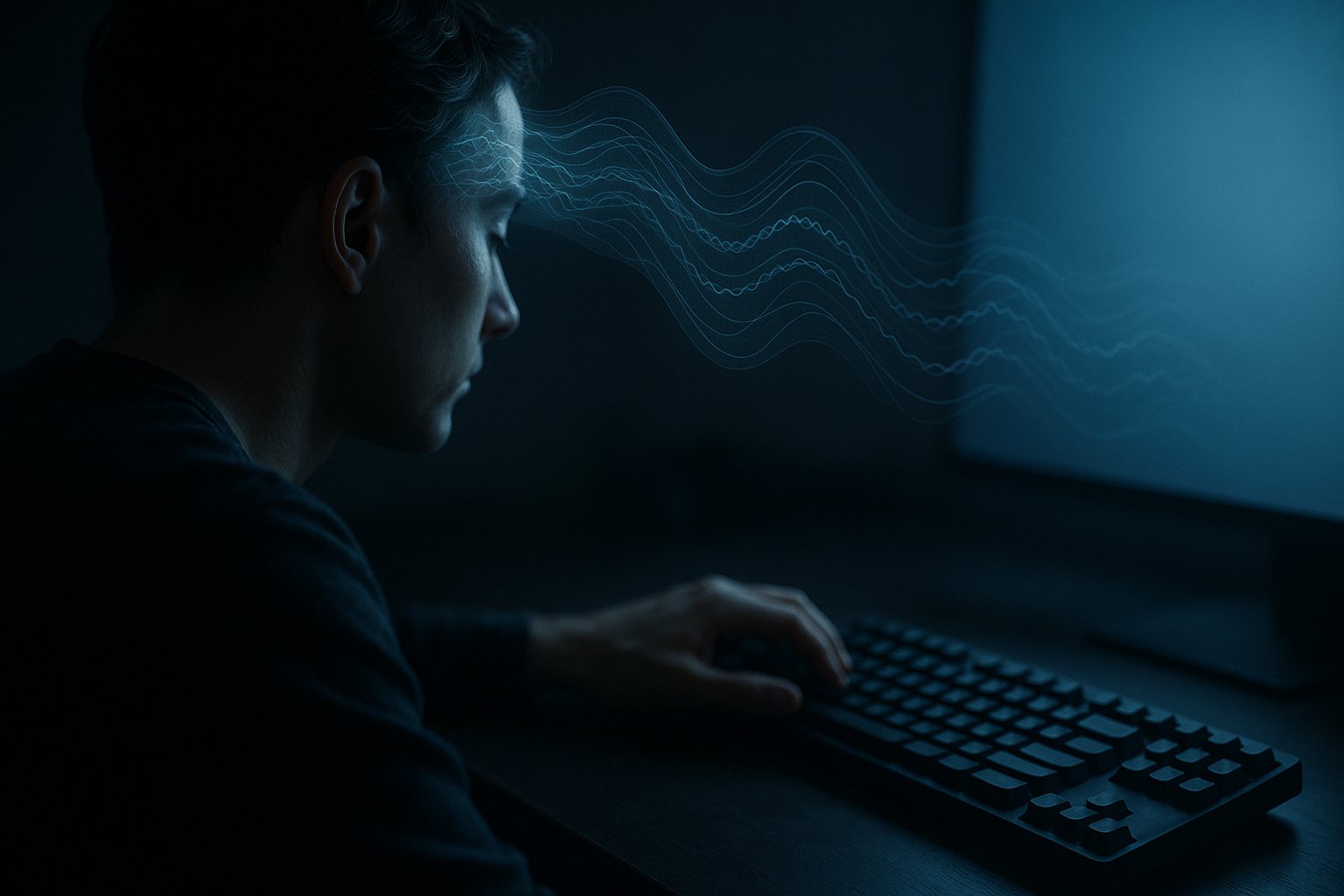
The reel’s argument is that typing is a slow, lossy interface, and that the next frontier is feeding models what you feel and intend, not just what you type. That’s a reasonable opinion, but it’s the creator’s framing. It isn’t something I heard Huberman say in the episode.
My take: the direction is plausible, and it’s worth watching. Brain-computer interfaces are getting better, and a Nobel just put attention on tools that control neurons. But “every lab becomes a biotech company” is a podcast prediction from a neuroscientist, not a roadmap. I’d want to see a hire, an acquisition or a product from one of those three before I believed it.
Until one of them says so itself, treat this as a bet, not news.
Sources
I leaned on the Colossus page for episode 494, dated 10.06.2026, and its English YouTube captions for everything Huberman said. Two October 7 write-ups, one from StartupHub and one from AI Weekly, gave me the secondhand coverage. The Nobel details come from Al Jazeera’s October 5 report. The Neuralink numbers are company-reported, and I got them from Let’s Data Science because Neuralink’s own post wouldn’t load for me.
Chris Meredith writes about AI, technology, and what it actually means for real people. Follow along on Substack: monkeyattack.substack.com