
By Chris Meredith
Meta’s Ray-Ban smart glasses have sold in the millions. They record video. They look exactly like regular sunglasses. And until recently, if one was pointed at you in a coffee shop, on a train, or at a concert, you had no way of knowing.
A 30-year-old Polish software developer named Pawel Szydlowski decided to change that.
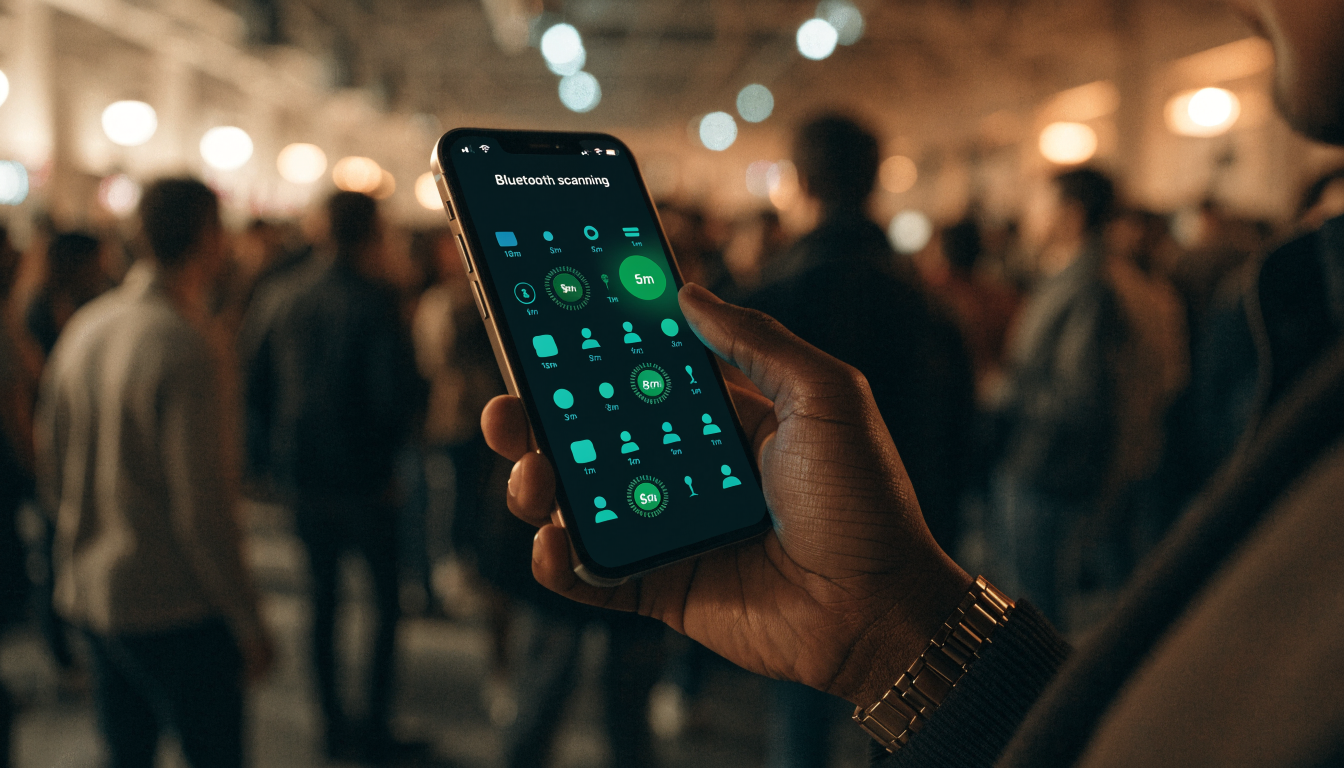
His app, Zuckoff, uses your iPhone’s Bluetooth radio to scan for the wireless fingerprint that Meta smart glasses broadcast, and alerts you when a pair is nearby.

How It Works
Meta glasses, like most Bluetooth devices, continuously broadcast a signal advertising their presence. Szydlowski bought several models of smart glasses, catalogued their Bluetooth identifiers, and built a matching engine.
“If the unique identifier matches, and also if the manufacturer identifier matches, then we have like an ultimate combo,” he told The Next Web.
The free version shows the estimated proximity of any detected glasses on a live scanning screen. The paid tier (Zuckoff Pro) runs in the background and sends push notifications even when the app is closed.
The approach requires no hacking, no signal interception, and no special hardware. It is entirely legal and uses information the glasses broadcast openly.
The Privacy Gap It Fills
Meta’s Ray-Ban glasses have been a flashpoint for wearable privacy since their launch. The glasses include a small LED that lights up when recording, but users quickly discovered that a two-dollar sticker over the light defeated the indicator. Meta eventually added a software lock that stops recording when the LED is covered, but the episode revealed how thin the technical protections really are.
Venues responded to public pressure by banning the glasses outright (cinemas, schools, and several UK pubs have posted no-glasses policies). But bans require enforcement, and enforcement requires detection.
Zuckoff is the first widely available consumer tool that provides that detection layer.
“We as a society have the right to at least know that someone is recording,” Szydlowski said.
The app reached 5,000 installs within its first month on the App Store, with comparable Android alternatives already in circulation.
What It Can’t Do
Zuckoff detects that glasses are nearby. It cannot confirm whether they are actively recording. It cannot identify the wearer. And it offers no recourse for people who don’t have the app installed.
Those limits are real, but they also aren’t the point. The question Zuckoff answers (are glasses capable of recording me in this room right now?) was previously unanswerable without asking every person you could see.
The Name
The app’s name takes a swing at Mark Zuckerberg, Meta’s CEO. It also happens to match the name of Mitchell Zuckoff, a journalism professor at Boston University who learned he shared a name with a privacy app via news coverage. He reviewed the situation and chose not to pursue any legal action, citing his own priorities around child surveillance protection.
The Bigger Picture
Zuckoff is a symptom of a wider tension that wearable AI is forcing into the open: the gap between what technology can do and what social norms have caught up to.
Smart glasses are getting better, cheaper, and harder to identify as cameras. Regulation has not kept pace. In that gap, individual developers are building tools, sometimes rough and sometimes limited, that give ordinary people at least some signal about their environment.
The app is free at zuckoff.app.
Source: Digital Trends / The Next Web
Chris Meredith writes about AI, technology, and what it actually means for real people. Follow along on Substack: monkeyattack.substack.com